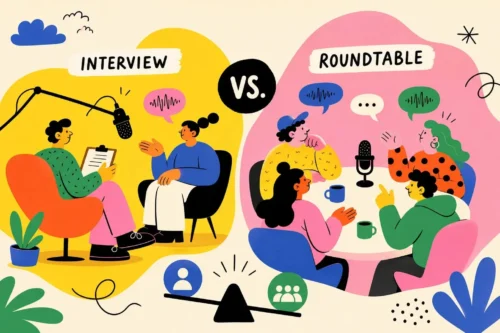
The choice between an interview podcast vs roundtable format is not a content preference decision. It is a brand strategy call that affects your production budget, your guest relationships, your editing workflow, and ultimately what your audience comes to expect from your show. Many brands default to one format or the other based on what they’ve heard before, without asking whether that format actually fits their messaging goals and internal capacity.
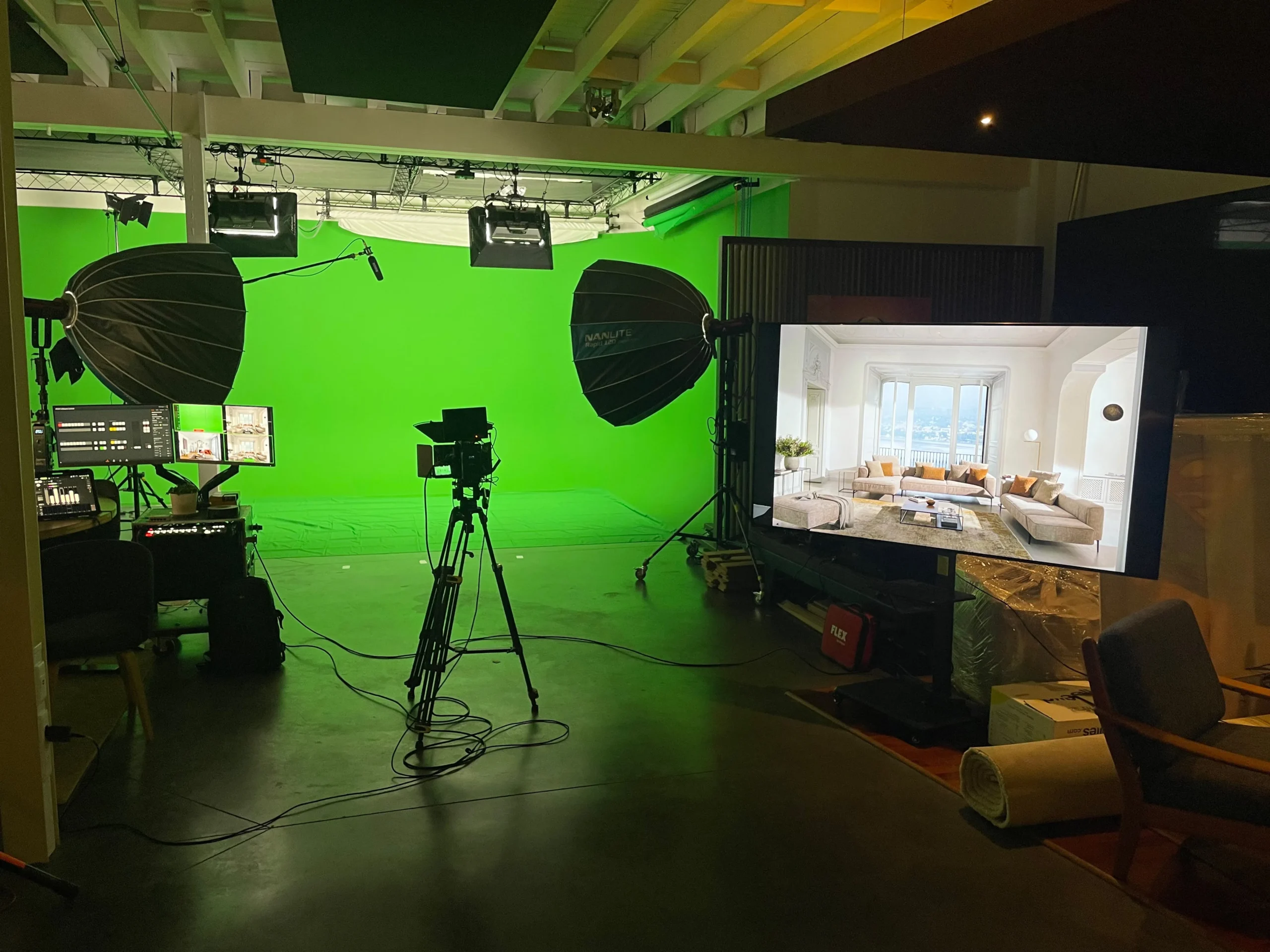
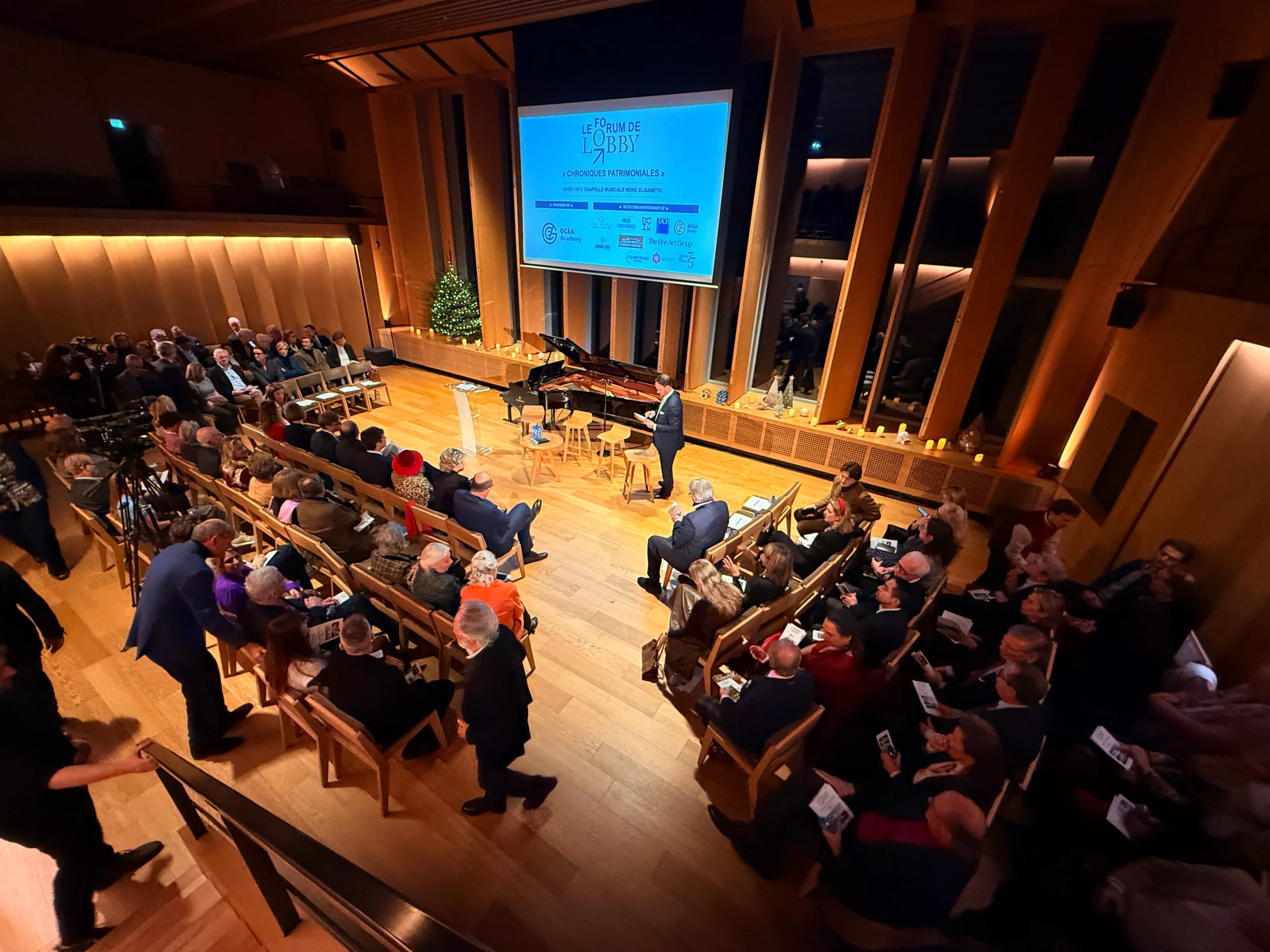
At StreamBox, we record both styles regularly in our Brussels studio, and the pattern we observe is telling: brands that build shows with real staying power tend to be the ones who made a deliberate format choice before the first recording session. Brands that struggle often chose by instinct and then tried to retrofit the production around it. This article gives you a clear podcast format comparison so you can make that call with confidence.
Interview Podcast vs Roundtable: What Each Format Sounds Like in Practice
The interview-style podcast
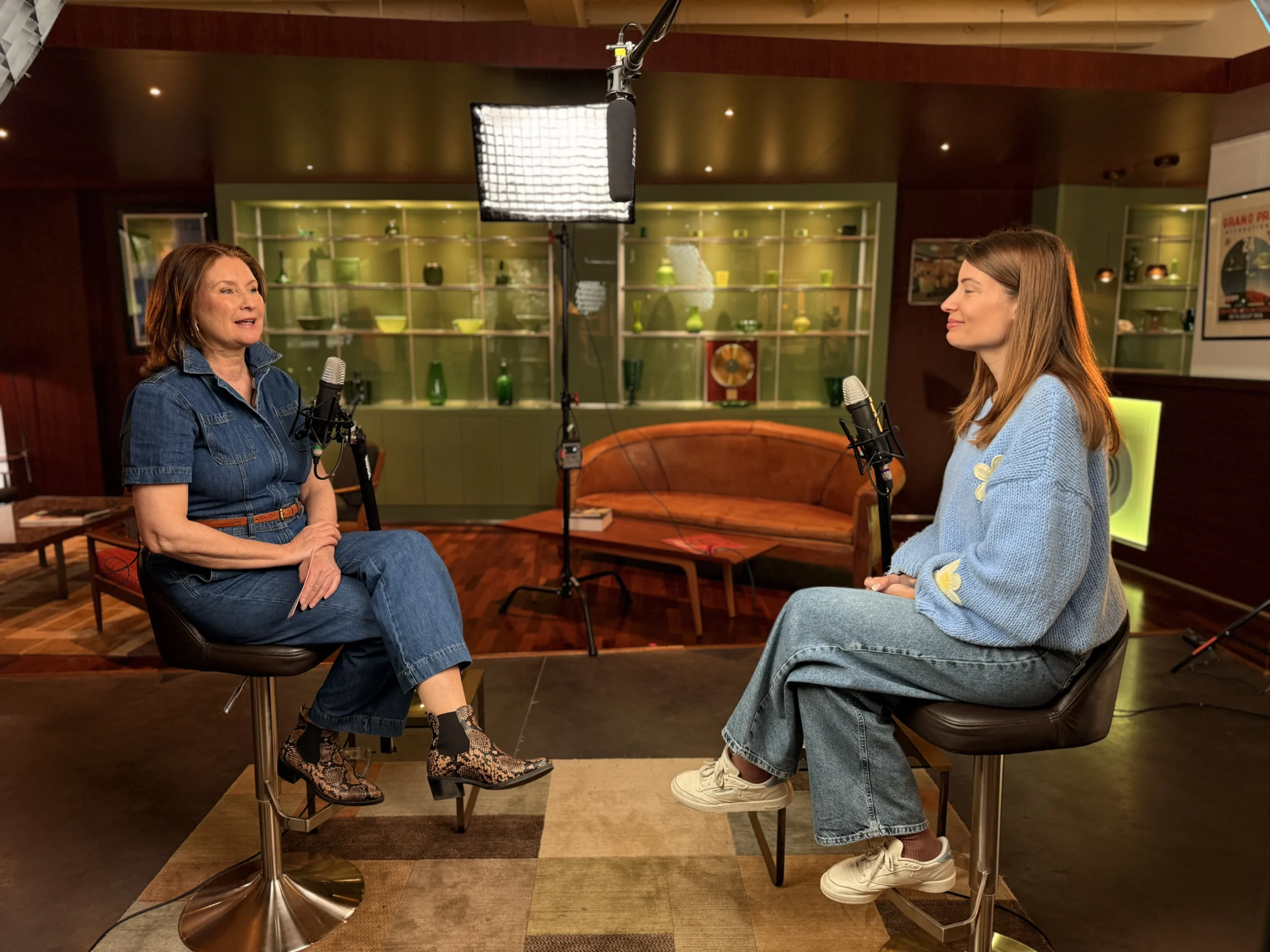
An interview podcast puts one host and one guest in conversation, with the host controlling the arc and the guest carrying the expertise. Think Fresh Air or The Tim Ferriss Show: the episode has a clear beginning, a central narrative thread, and a defined end point. The host shapes the journey through question sequencing and active listening, and the edit honors the guest’s insight without letting the conversation drift into territory that serves no one.
What makes an interview episode work is precisely that constraint. One voice, one perspective, one editorial throughline. The production team knows roughly what they are building before the recording starts, and the listener knows what kind of experience they are signing up for.
The roundtable and panel discussion podcast
A roundtable brings two to five voices together under a moderator, and the format’s energy comes from contrast, disagreement, and chemistry. Pivot is a useful reference point: two hosts with genuinely different worldviews, rapid topic transitions, and a rhythm the audience learns to rely on. The format creates something a solo interview rarely can, the feeling of being inside a smart, opinionated conversation rather than observing one.
That upside comes with proportional execution risk. Without structured segments, clear role assignment for each panelist, and a moderator who actively protects the flow, a roundtable can turn into overlapping monologues that frustrate listeners and punish editors. The format’s potential ceiling is higher than the interview format’s, but so is its floor risk, meaning completion rates and audience retention show more volatility when moderation is weak.
Interview Podcast vs Roundtable: The Real Production Cost of Each Format
The production budget difference between these formats is where most brands get surprised. A polished episode between 45 and 60 minutes typically requires 8 to 15 total staff-hours across pre-production, recording, and post-production. A comparable roundtable with three to five participants usually runs 14 to 25 hours. That is not a minor operational difference; it is a structural one that affects every decision from hiring to scheduling to release cadence.
What goes into producing an interview episode
The interview production chain is lean by design. Pre-production covers guest research, outreach, scheduling, and a briefing call, which typically runs three to six producer-hours. The recording session itself is one to two hours including setup and buffer time. Editing a polished episode in that length range takes roughly three to six editor-hours, and post-production audio costs land between $300 and $800 for a professionally finished episode. One producer, one host, one editor: the staffing model is simple and predictable.
That predictability is one of the interview show format’s underrated advantages. Budget planning is straightforward, timelines are consistent, and the production team stays small. For brands that are early in their podcasting journey, that matters enormously.
Why a roundtable demands more from everyone
Every step in the interview workflow multiplies when you add participants. Scheduling across three to five guests is its own coordination project. Sound checks take longer. Recording sessions run between 1.5 and three hours. The editing phase is where the cost difference becomes most visible: multitrack panel editing requires synchronization, noise matching across speakers, volume balancing, and cross-talk cleanup that interview editing simply does not involve.
A three-person roundtable typically runs at about 1.5 times the interview production cost. A five-person panel can reach two times or more, with post-production fees landing between $500 and $1,500 per episode before show notes, transcripts, or social clips. Production complexity scales with every voice you add, not just with the recording time. This does not make roundtables the wrong choice, but it makes them the more resource-intensive one, and that resource commitment has to be sustainable across an entire season, not just episode one.
How Guest Dynamics Shape the Content You Create
Interview dynamics: depth over breadth
A one-on-one conversation puts the full editorial weight on a single guest, which allows the host to pursue unexpected threads, push back on vague answers, and let silence do its work. Guest preparation is simpler because the scope is narrow. The listener gets depth, narrative momentum, and a clear point of view. Interview-style podcasts tend to produce steadier listening behavior; according to 2026 podcast engagement benchmarks from providers such as Spotify for Podcasters and Podtrac, completion rates for focused episodes in the 30- to 45-minute range average around 68%.
The risk is one-dimensionality. If the guest is not compelling or the host does not dig, there is nothing else in the room to rescue the episode. The format gives you less margin for a mediocre recording.
Roundtable dynamics: energy, chemistry, and the risk of drift
Multi-guest podcast dynamics run on contrast. When panelists hold distinct roles and genuine disagreements, the conversation creates energy that a solo interview rarely matches. Roundtables can outperform interviews on retention when the moderation is sharp, though they show more volatile patterns overall. The same 2026 benchmark data places completion rates for panel episodes closer to 64% on average, with poorly paced episodes showing earlier listener exits when speaker overlap or topic drift occurs.
A roundtable’s quality is almost entirely determined by preparation and moderation technique, not the number of guests. The most effective moderators call on speakers by name rather than opening to the whole group, use concise interruptions (“let me pause you there so we can bring in another perspective”) to manage cross-talk, and summarize each segment before transitioning to the next topic. Without that active facilitation, voices compete and quieter participants disappear from the recording entirely.
Matching the Format to Your Brand Positioning
When an interview-style podcast fits the brand
Brands with a clear thought leadership angle, a strong internal voice (a founder, a senior expert, or a recognized host), or a subject-matter-driven content strategy usually perform better with the interview format. It signals editorial clarity and authority. It also works well when the brand wants to build strategic relationships with specific guests as part of a broader content or partnership approach, since the one-on-one format gives guests a meaningful showcase that a panel slot does not.
For B2B brands specifically, the interview format tends to be the stronger choice for account-based marketing and demand generation. Guests have a genuine reason to share the episode, their audiences discover the brand, and the host’s editorial judgment becomes a signal of expertise over time. Sponsorships and direct partnerships also tend to perform better on interview shows, where a credible host can deliver a focused endorsement rather than a diluted group mention.
When a roundtable podcast serves the messaging better
Companies that want to convey community, debate, and multi-perspective thinking benefit from the panel format, particularly in industries where no single voice carries all the credibility. Roundtables also fit brands producing content for internal audiences, industry peers, or professional communities where diverse viewpoints signal rigor and inclusivity rather than a single corporate line.
From a monetization standpoint, roundtable shows tend to convert better to memberships and paid communities. Recurring panelists with strong chemistry build audience loyalty around the cast itself, and that community identity creates a natural path to premium tiers, live events, and extended panel discussions. If that is the business model behind the show, the roundtable format supports it in ways a standard interview show does not.
Making Either Format Work with the Right Production Setup
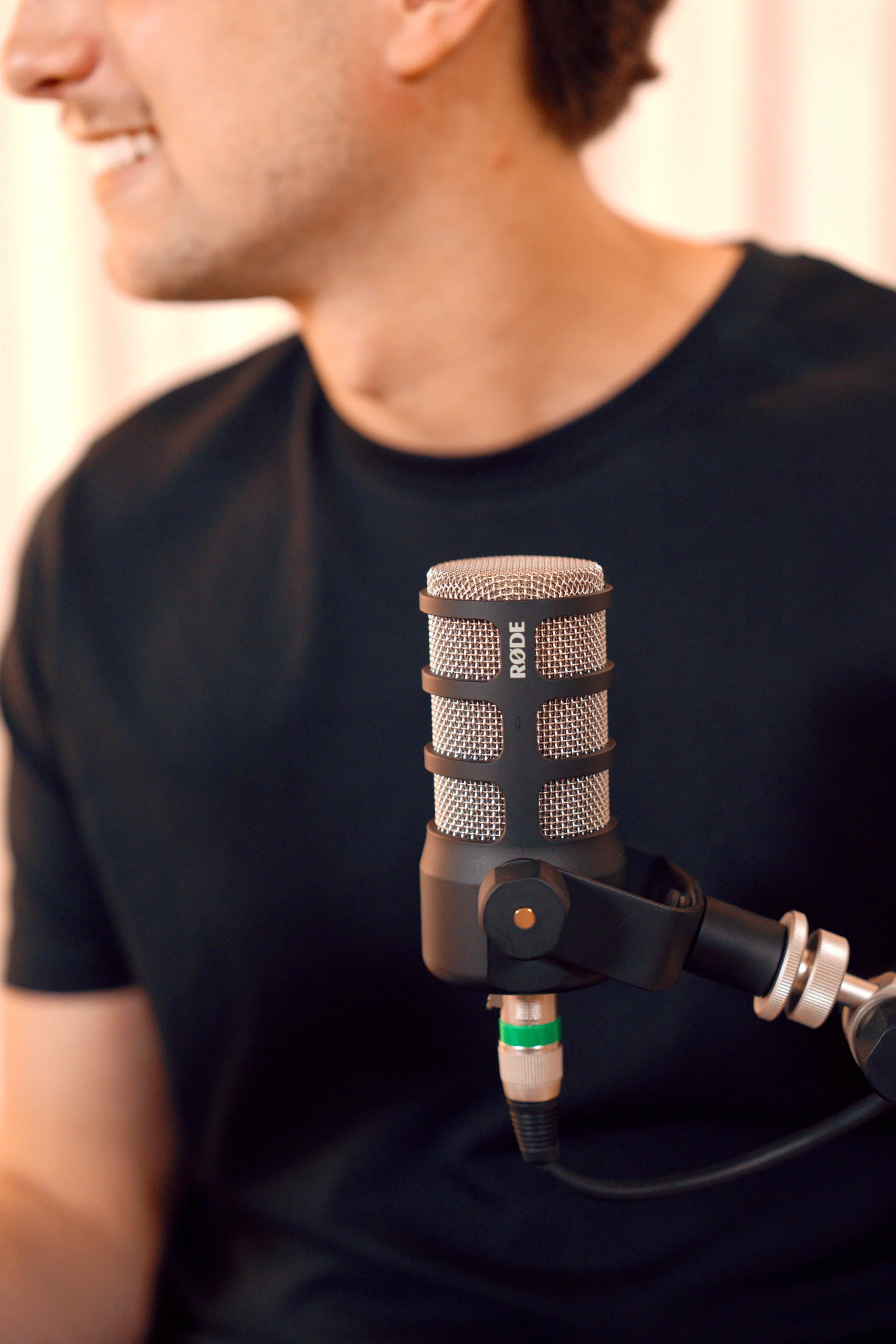
An interview needs one clean signal, reliable acoustics, and an editorial workflow built for one-on-one conversation. A roundtable needs a different configuration entirely: one cardioid dynamic microphone per participant, each recorded to an isolated track through a multichannel interface, and real-time level monitoring across all tracks during the session. The moderation structure also has to be planned before the recording starts rather than improvised inside the room.
For an in-person four-person panel, that means four microphones, four stands, four XLR inputs, four independent tracks, and a producer monitoring all channels throughout the session. The format sets the creative direction; the production setup determines whether it delivers on that direction consistently. A well-recorded roundtable and a tightly edited interview both depend on infrastructure decisions made well before anyone sits down at a mic.
This is where working with an experienced production team like StreamBox makes the format choice actually executable. Whether a brand needs a tightly edited interview series or a moderated multi-guest panel, the production infrastructure, editorial direction, and post-production workflow need to match the format’s demands from episode one. Reach out to the StreamBox team to scope the right format and production setup for your show.
Interview Podcast vs Roundtable: A Clear Decision Framework
When deciding between an interview podcast vs roundtable, the key variables are your brand’s message, your available talent, and your production capacity, and those three factors rarely align without deliberate planning. Interviews are leaner, more predictable, and easier to execute well from the first episode. Roundtables have higher upside when the cast is right and the moderation is strong, but they demand more from every person involved in the production chain.
If the goal is sustainable content output that builds trust over time, starting with the interview format and adding panel episodes once the production rhythm is established is typically the smarter move. The interview format lets you develop your editorial voice, build guest relationships, and refine your post-production workflow without the added complexity of managing multiple participants and tracks simultaneously. Once that foundation is solid, a roundtable special or seasonal panel series becomes a deliberate expansion rather than an operational gamble.
Whichever format you choose, execution quality is what the audience actually hears. A well-moderated, well-edited roundtable will outperform a poorly prepared interview every time, and the reverse is equally true. At StreamBox, we produce both formats end-to-end from our Brussels studio, from guest briefing and session recording through editing, SEO formatting, and multi-platform distribution. The interview podcast vs roundtable question is step one. We handle the rest.