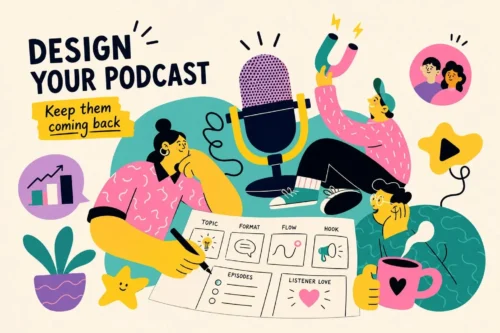
Most corporate podcasts don’t fail because of bad content. They fail because the brand started recording before it had a series. There’s a real difference between producing episodes and building a show, and that difference becomes painfully clear around episode four or five when hosts run out of ideas and listeners stop returning. Designing a corporate podcast series format means making architectural decisions before you ever step in front of a mic: what kind of show are you building, who is it for, how long should each episode run, and how do topics connect from one week to the next? Getting those decisions right early is the structural work that separates a forgettable batch of recordings from a show people actually subscribe to.
At StreamBox, we work through exactly these questions with every client during our pre-production briefing. A series that holds together structurally will always outperform a collection of disconnected episodes, no matter how strong any single recording is. This guide walks you through every design decision that separates a forgettable corporate podcast from one your audience actually comes back for.
The series framework you need to build before you record anything
The real work of a branded audio series happens in the design phase, not the recording phase. Before you book a studio or brief a guest, five things need to be locked down: a clear show concept, a defined target audience persona, an editorial point of view, a mapped topic universe, and your format constraints. Without these foundations, brands consistently hit a content wall around episode six because they never articulated what the series was trying to accomplish or where it was going.
Professional production studios run what we call a series framework session before any recording begins. At StreamBox, this covers format selection, season arc, episode structure, guest criteria, and distribution goals in a single briefing. That pre-production discipline is what makes consistency possible from episode one, rather than something brands try to retrofit after publishing a handful of mismatched episodes. The deliverable is a podcast series bible: a document that governs every production decision going forward, so no episode gets made in a vacuum.
Matching your corporate podcast series format to your actual business goal
The format you choose should follow what you want the show to achieve, not what sounds exciting in a planning meeting. Four formats cover the vast majority of corporate use cases, and each one drives a different outcome. Choosing the wrong one isn’t just an aesthetic problem, it means the show will work against the business goal it’s supposed to serve.
The one-on-one interview is the strongest starting point for most B2B brands. It builds borrowed credibility through respected guests, creates relationships with potential buyers and partners, and gives guests a reason to distribute the episode to their own audiences. The educational or masterclass series is more demanding to produce but delivers strong results for lead nurturing and customer education, especially for complex products or services. A co-hosted conversation format suits culture-building and accessible brand storytelling. The narrative or customer-story format excels at demand generation and social proof, though it carries the highest production intensity of the group. Each of these business podcast format examples calls for a different production approach, timeline, and skill set from your team.
One decision most brands skip is the internal versus external distinction. An internal podcast, for CEO updates, manager briefings, or onboarding programs, requires brevity, trust, and a completely different set of success metrics than an external branded show. Internal episodes should run 10 to 15 minutes and prioritize information density. External thought leadership episodes earn 20 to 35 minutes because listeners are choosing to spend that time with your brand. Designing both under the same format logic creates episodes that feel wrong for both audiences.
Season structure, episode length, and publishing cadence
An 8-to-12-episode season is the corporate standard for good reason: it gives you enough runway to build listener habits without committing to an indefinite production schedule before you know what’s working. Launch with three episodes ready rather than one so that new listeners can immediately binge forward. After that, a biweekly cadence is the most sustainable default for most brands, balancing momentum with the time your team needs to produce, review, and distribute each episode properly.
Episode length
Episode length should be driven by the complexity of the topic and the listener’s context, not by convention. External thought leadership and interview formats work well at 20 to 35 minutes. Timely news or commentary shows can hold attention at 10 to 20 minutes. Internal update episodes should stay under 15 minutes, and internal microlearning content works best at 5 to 10 minutes. A consistently delivered 22-minute episode will always outperform an ambitious 50-minute show that ships irregularly. Consistency is the primary variable; everything else is secondary.
Publishing cadence
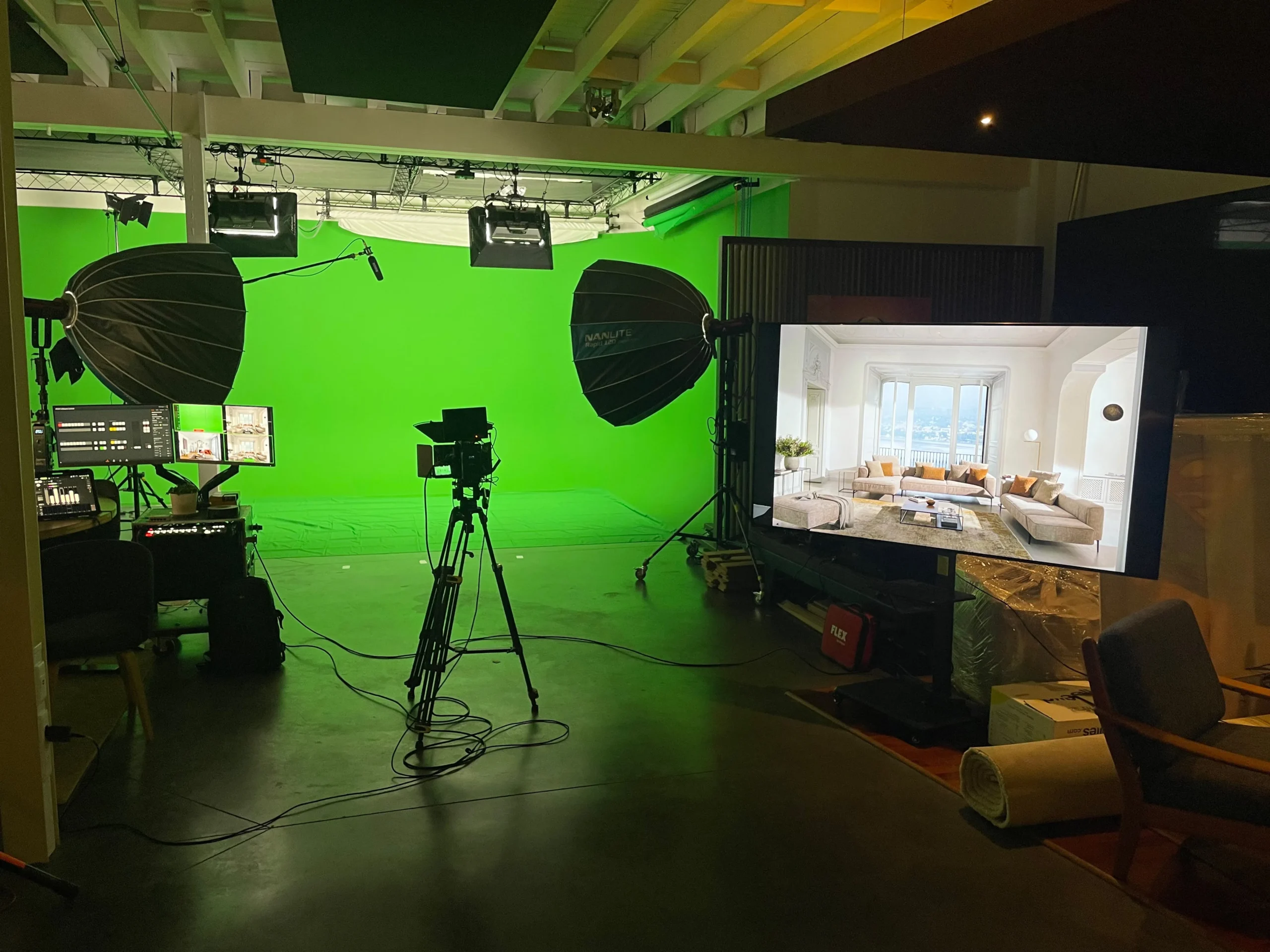
Batch recording is what makes a consistent publishing cadence achievable in practice. Recording two to four episodes in a concentrated session protects continuity, reduces per-episode production overhead, and means a missed recording day doesn’t collapse your publishing calendar. StreamBox’s batch production model was built around exactly this logic: clients can record a full season in a concentrated schedule and walk away with weeks of broadcast-ready content.
Topic sequencing and guest strategy that build series momentum
Topic sequencing is a narrative architecture decision, not a content calendar decision. A strong season opens with a foundational episode that defines the problem or space the show lives in, moves through increasingly specific or applied episodes in the middle, and closes with a synthesis or forward-looking perspective. This gives listeners a reason to move through the season rather than cherry-picking individual episodes. When you map your topic universe at the framework stage, including more ideas than you’ll ever use in one season, you also protect yourself from running dry mid-series.
Guest selection should follow your editorial line, not just name recognition. The criteria that matter are relevance to the specific episode topic, alignment with your target audience’s world, diversity of perspective across the full season, and the guest’s potential to share the episode with their own network. A guest who is brilliant but misaligned with your audience doesn’t move your show forward; a guest who is moderately well known but deeply relevant to your listeners does. The pre-interview brief is the tool that aligns guests to your show’s tone before recording, preventing off-brand episodes no matter how good the conversation itself was.
The episode template that protects your brand voice every week
Consistency across a series doesn’t come from scripting every word. It comes from a repeatable segment structure that gives each episode its shape while leaving room for the content to breathe. For episodes running 25 to 35 minutes, a structure that consistently works looks like this:
- A cold open of 30 seconds leading into your branded intro
- A brief “why this matters” bridge connecting the topic to real audience priorities
- Three content segments of five to seven minutes each
- A mid-roll corporate message or sponsor read placed at a natural pause point
- A rapid-fire or listener question segment
- A recap with one primary call to action
- A consistent outro
The structure is identical every episode; the content inside each segment varies. That combination is what gives the show both predictability and freshness, the hallmark of any well-designed corporate podcast series format.
Six elements should always be written verbatim: the first 20 to 30 seconds, the branded intro, any sponsor or corporate messages, required disclosures, the primary call to action, and the sign-off. Everything else in a conversation-based show should be guided by bullet points and prepared questions rather than a word-for-word script. This balance keeps executive interviews and customer conversations sounding human while protecting your brand voice at the moments that matter most. Giving hosts a full script for a guest conversation produces exactly the kind of stilted, over-produced episode that listeners don’t return to.
Measuring whether your corporate podcast series format is working
The measurement framework should be defined before launch, not after you’re trying to justify the budget. Choose one primary KPI tied to the business goal the show was built to serve, then support it with a small set of diagnostic metrics. Brands that default to download counts as their primary measure end up optimizing for potential reach rather than actual business impact, a losing strategy that’s hard to reverse once it’s set.
For a thought leadership show, completion rate combined with returning listener rate is the primary KPI to watch, supported by media mentions and branded search lift. A lead generation show calls for podcast-attributed pipeline as the headline metric, with CTA conversion and demo requests as supporting signals. When it comes to internal employee engagement shows, the right starting point is employee reach as a percentage of headcount, with completion rate by department and post-episode pulse scores providing the diagnostic layer.
A three-level dashboard covers everything you need without creating noise. Reach tracks unique listeners, downloads, and subscriber growth. Engagement tracks completion rate, average listen time, and drop-off analysis. Business impact connects listening to action: leads, meetings, pipeline, or employee behavior change depending on the show type. Review this dashboard at the end of each season rather than episode by episode so that decisions are based on pattern data rather than the inevitable variability of individual episodes. A single underperforming episode tells you almost nothing useful; a season of data tells you where to refine.
Design the show before you book the studio
A corporate podcast series format is an architectural decision, not a content decision. The brands that build loyal audiences design the series before they schedule a recording session. Every element covered in this guide depends on the others: format selection shapes season structure, season structure constrains episode length, episode length influences topic sequencing, and topic sequencing determines who belongs on your guest list. Pull one thread and the rest shift with it. That’s why podcast format ideas for brands work best when they’re treated as a connected system rather than a checklist of independent choices.
At StreamBox, our pre-production process is built to work through every one of these structural decisions before a single episode goes to record. Whether you’re launching a first-ever branded series or restructuring a show that hasn’t found its footing, you’ll leave the process with a production-ready plan, not a vague idea of what your show might become. Reach out to our team to schedule a series framework consultation.