A podcast distribution strategy is the system you use to get your show onto the right platforms, discovered by the right listeners, and promoted consistently enough to build compounding audience growth. It covers four interconnected areas: platform and hosting selection, RSS feed setup, metadata optimization, and ongoing promotion. Many shows that struggle to gain traction report significant distribution gaps, not weak content, as the core issue. This guide gives you a step-by-step framework to fix that, from choosing your hosting platform through setting measurable KPIs, and it closes with a look at how full-service studios like StreamBox fold distribution directly into the production workflow so branded shows go live everywhere at launch, not weeks later.
Key takeaways
- Four directories first: Submit to Apple Podcasts, Spotify, YouTube, and Amazon Music before anything else; together they cover the majority of active listeners.
- One canonical RSS feed: Submit the same feed URL to every platform and never generate platform-specific copies that drift out of sync.
- Metadata drives discoverability: Your episode title and the opening sentence of your description carry the most weight in both Apple Podcasts and Spotify search, optimize those fields first.
- Cross-promotion converts best: Demographic-matched guest swaps are the highest-confidence organic tactic for acquiring pre-qualified listeners without ad spend.
- Six KPIs, not one: Track IAB-qualified downloads, unique listeners, subscribers, completion rate, acquisition source, and returning vs. new listeners as a system, not in isolation.
- Integrated production wins: When distribution is built into the production process, shows launch simultaneously everywhere instead of staggering over weeks.
Podcast distribution strategy: Which platforms to prioritize
Start with the four directories that together account for the majority of podcast listening: Apple Podcasts, Spotify, YouTube/YouTube Music, and Amazon Music/Audible. Getting these four live and verified is your first milestone; secondary directories come after. The table below summarizes each platform’s estimated audience share and how submission works.
| Platform | Estimated audience share | Submission method |
|---|---|---|
| Apple Podcasts | ~30, 36% of downloads | Apple Podcasts Connect (RSS feed + review) |
| Spotify | ~24, 27% of consumption | Spotify for Creators (RSS feed + ownership verification) |
| YouTube / YouTube Music | Broad search-first discovery; billions of monthly users | YouTube Studio RSS import or direct video upload |
| Amazon Music / Audible | 80M+ total Alexa and Echo ecosystem users (not podcast-specific) | Amazon Music for Podcasters (RSS feed + ownership confirmation) |
Once those four are live, add iHeartRadio for U.S. radio audiences, Podcast Index for open-ecosystem coverage, and Pocket Casts and Castbox for dedicated app listeners. Treat this second pass as a weekend task after your core directories are confirmed and pulling episodes correctly.
Your hosting platform matters as much as your directory list. The right host submits one RSS feed and handles every future episode automatically, so you never repeat the submission process. To make comparison easier, here is a quick-reference breakdown of the major options:
- Buzzsprout, easiest onboarding for a single show
- Transistor, built for teams managing multiple shows or a network
- Captivate, centered on audience growth tools
- Podbean, leads on built-in monetization features
- Libsyn, suits established publishers who prioritize archival stability
- Spotify for Podcasters, free and Spotify-native, but trades cross-platform analytics depth for convenience
How to set up your RSS feed without errors
Your RSS feed is the backbone of your entire podcast distribution strategy. Serve it as RSS 2.0 over HTTPS, with the correct content type header, absolute URLs for every enclosure and artwork file, and a stable GUID for every episode. Never regenerate GUIDs when you edit an episode; platforms treat a new GUID as a new episode and will republish it as such. Before submitting anywhere, publish at least one episode, because most directories require a live episode in the feed to approve the show.
Submission order and feed syndication
The recommended submission order is: YouTube first, then Spotify, then Apple Podcasts, then Amazon Music, then secondary directories. This sequence prioritizes the platforms with the longest review windows. After initial approval, all future episodes are pulled automatically from your feed, no repeat submissions required.
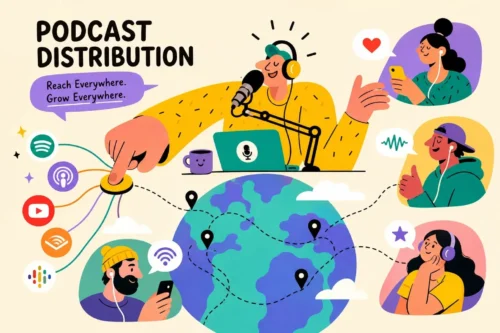
This process is also how podcast syndication works in practice: one canonical feed syndicates your content across every directory and third-party network simultaneously. Keeping that feed clean and consistent is what makes the whole system reliable at scale.
Feed validation and monitoring
Validate your feed through the W3C Feed Validation Service before going live. For a quick raw-response check, the curl command-line tool lets technical users confirm that unauthenticated requests return clean XML rather than a redirect loop or login page; if you prefer a simpler option, a hosted validator like Podbase or Cast Feed Validator achieves the same result without the command line. Either way, check for broken XML, unescaped characters, duplicate IDs, and wrong content types. Set up ongoing monitoring for the same issues, a feed that breaks silently after a hosting migration can quietly stop delivering new episodes to thousands of listeners before anyone notices.
What metadata actually moves the needle on discoverability
Your show title should be keyword-focused, not clever. Platforms truncate descriptions early, so front-load the value in your first sentence rather than burying it after a paragraph of context. Choose a primary and secondary category that accurately describes your content; both Apple and Spotify weight category relevance in their ranking signals. Cover art should have strong contrast and remain legible at small thumbnail sizes, follow each platform’s published artwork specifications (Apple Podcasts, for example, requires a minimum of 3,000 x 3,000 pixels) and test your art at the smallest size it will appear in-app.
At the episode level, lead titles with the topic or guest name rather than an episode number. Episode numbers belong in the dedicated number field, freeing your title space for phrases listeners actually search. Show notes should include a searchable summary, timestamps, and resource links. Transcripts are where the compounding SEO value lives: raw transcripts published as plain text rarely rank, but edited episode articles with proper headings, internal links, and embedded audio can meaningfully increase organic traffic over time. That inbound traffic eventually converts into new listeners who never would have found you through the directories alone.
Which promotion tactics drive real listener growth?
Demographic-matched cross-promotion is the highest-confidence organic tactic available to any show at any size. Recent testing by Acast found that cross-promotion with audience-matched shows can double listener conversions, and guest-based promotion around recognizable names lifted listens between 27% and 80%. The mechanics are straightforward: approach shows with overlapping audiences and non-competing content, agree on a dedicated episode mention rather than a pre-roll ad, and track lift using a unique smart link so you know exactly what each swap generated.
Short-form video clips extend your reach beyond your existing subscriber base. A widely cited creator case study found that distributing 40 captioned clips from a single episode generated dramatically greater reach than a single social post. YouTube deserves its own strategy separate from clip distribution. Episodes republished on YouTube perform best when they are genuinely watchable, titled for search rather than chronology, and structured with chapters. YouTube chapters have been associated with a 28% increase in average view duration, and a well-titled YouTube episode delivers search discovery for months after publication.
Email consistently produces higher conversion rates than social followers, with open rates typically between 35% and 45% compared to 3% to 5% organic social reach. A weekly episode digest with a key quote, one takeaway, and a single listening call to action is enough. Layer in transcript-led SEO for compounding inbound traffic over time. The best sequencing runs as follows: cross-promotion and guest swaps for immediate qualified acquisition, short-form video for reach, email for conversion, and transcripts for long-term organic discovery.
How to know your podcast distribution strategy is working
Six KPIs form the measurement foundation for any podcast distribution setup. IAB-qualified downloads measure episode reach and volume. Unique listeners give you actual audience size without inflating the number through repeat plays. Subscribers and followers signal growth trajectory. Completion rate, the percentage of listeners who reach a defined endpoint such as 80% of episode runtime, tells you where content engagement drops off. A healthy branded podcast typically lands between 50% and 60% completion; 70% or higher is strong. Listener acquisition source shows which channels are generating new listeners. Returning versus new listeners measures loyalty and whether distribution is genuinely expanding your audience.
One critical rule: downloads, plays, and unique listeners are not interchangeable across platforms. Always label each metric by source when combining data. Your tracking stack should include your podcast host dashboard for IAB-filtered downloads, Apple Podcasts Connect and Spotify for Creators for retention and subscriber data, Google Analytics 4 with UTM-tagged links for acquisition attribution, and smart links or vanity URLs for guest appearances and partner promotions. Combine all sources in Looker Studio or a shared spreadsheet, and keep each platform’s definitions clearly labeled so you are comparing like with like when you review monthly performance.
Why integrated production and distribution beats managing it yourself
The typical branded podcast workflow looks like this: the brand records audio, hands it to an editor, scrambles to set up hosting, spends weeks waiting for Apple and Spotify approval, and finally publishes a month after recording. Each step handled by a different vendor creates lag, metadata inconsistencies, and a missed launch window. By the time the show is live on all platforms, the momentum from the recording session has completely dissipated.
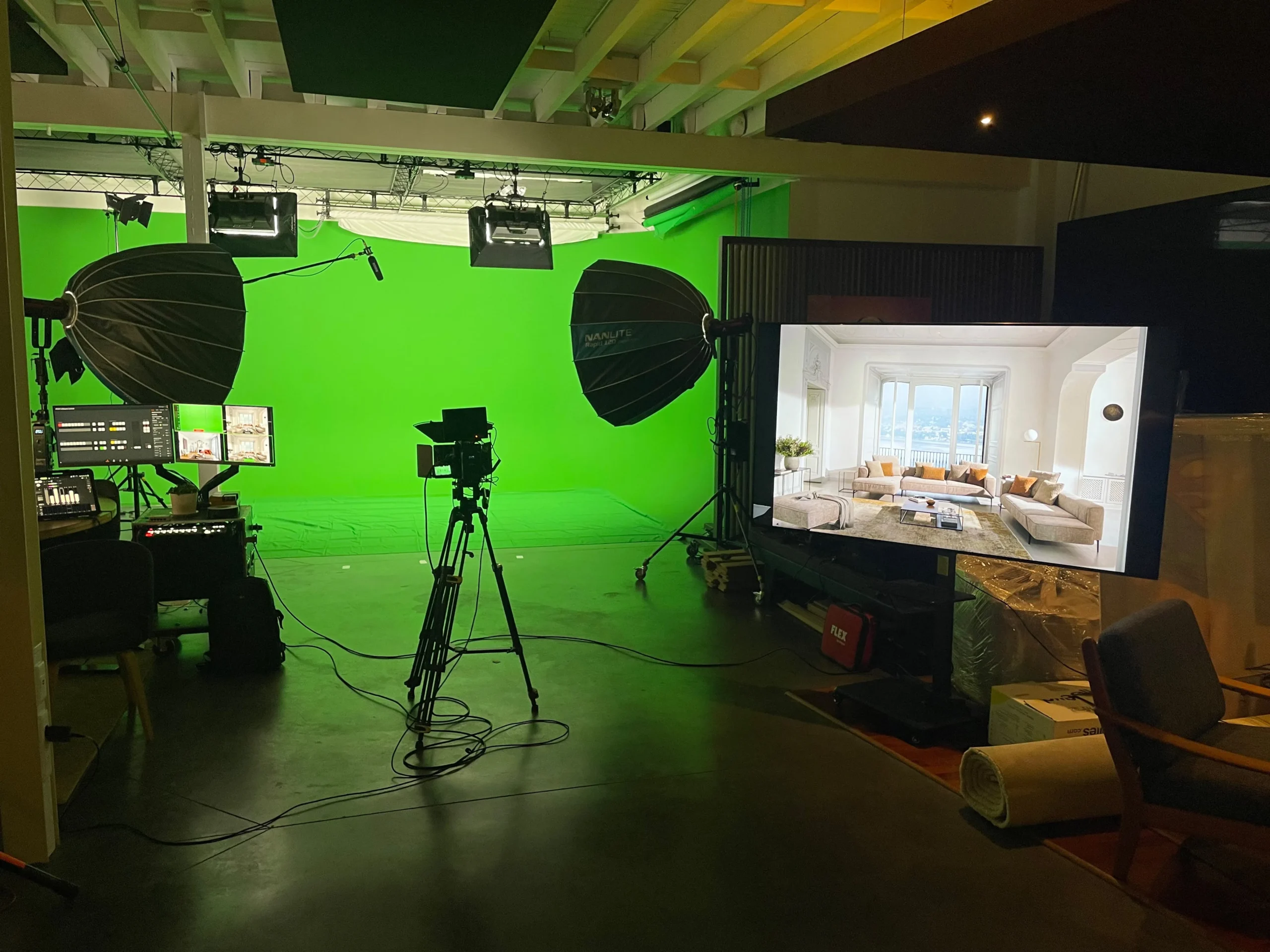
StreamBox is designed to eliminate that gap. As a full-service audiovisual production studio, StreamBox integrates RSS setup, directory submission, metadata optimization, and multi-platform distribution directly into the production process, so a branded podcast can go live on Apple Podcasts, Spotify, YouTube, Amazon Music, and other directories as part of a single coordinated project close rather than a drawn-out, multi-vendor handoff.
This model is especially valuable for companies running a seasonal series or a content calendar where publishing consistency directly affects listener retention. Batch production sessions allow teams to bank weeks of content efficiently, and coupling that with a built-in distribution workflow means every episode is formatted and queued for each platform before the session wraps. For brands that want broadcast-ready audio paired with a podcast distribution strategy that requires zero extra coordination, that end-to-end approach removes the friction that typically delays launches by weeks.
Build your podcast distribution strategy and let it compound
A podcast distribution strategy is not a one-time setup. It is a system with four moving parts: platform coverage across the right directories, a valid RSS infrastructure that never breaks silently, metadata that earns discoverability on both Apple and Spotify, and promotion tactics that compound over time through cross-promotion, YouTube search, email, and transcript-based SEO. Get each layer right and they reinforce each other rather than running in parallel with no connection.
Track the six core KPIs from episode one so every distribution decision is data-driven rather than intuitive. Know your completion rate before you change your episode length. Know your acquisition source before you invest more in clips or guest swaps. The brands and creators that grow consistently are the ones who treat distribution as a system to optimize, not a box to check.
If you want professional audio paired with a podcast distribution strategy that handles everything from feed to first publish, reach out to the StreamBox team to see how a fully integrated production and distribution model works in practice.
Frequently Asked Questions
Do I need to publish episodes before submitting to directories?
Yes — I require at least one live episode in the feed before submitting to directories. Most directories need a live episode to approve the show, so publish one episode first to avoid rejection or delay.
Can I create separate RSS feeds for different platforms to optimize content?
No — I use one canonical RSS feed and submit the same feed URL to every platform. Generating platform-specific copies risks them drifting out of sync and creates distribution gaps.
What order should I submit my show to major platforms?
Submit in this sequence: YouTube first, then Spotify, then Apple Podcasts, then Amazon Music, then secondary directories. This order prioritizes platforms with the longest review windows so your show gets live coverage faster.
How should I validate and monitor my RSS feed to prevent delivery issues?
I validate feeds using the W3C Feed Validation Service and perform a raw-response check with curl or a hosted validator like Podbase or Cast Feed Validator. I also monitor for broken XML, unescaped characters, duplicate IDs, wrong content types, and set ongoing monitoring to catch silent breaks after hosting changes.
Which specific KPIs should I track to measure distribution performance?
I track six core KPIs: IAB-qualified downloads, unique listeners, subscribers, completion rate, acquisition source, and returning versus new listeners. I label each metric by source, combine dashboards from host analytics, Apple Podcasts Connect, Spotify for Creators, GA4 with UTM-tagged links, and smart links, and keep platform definitions clearly labeled when reviewing performance.