This B2B content format comparison comes down to one finding: format choice, not publishing volume, is what drives pipeline. Most B2B marketing teams measure content success by volume, more posts, more articles, more formats, more channels. The problem isn’t effort. It’s that volume without format strategy is just noise with a budget. The real question isn’t how much you’re producing. It’s whether the format you chose is built for the stage of the buyer you’re trying to reach.
At StreamBox, we work with B2B brands daily on exactly this decision: what to produce, in what format, for what purpose. The patterns are consistent. Teams that grow pipeline from content aren’t producing more than everyone else. They’re matching formats to funnel stages, measuring what moves buyers forward, and building production systems that don’t collapse under their own weight.
This guide compares five core content types for B2B marketing: long-form articles, social content, podcasts, video, and webinars. Each is evaluated across four dimensions: production cost, distribution potential, audience engagement, and lead generation fit. By the end, you’ll have a clear picture of which formats match your resources, which match your buyer stages, and where to focus the next 90 days.
Why format choice matters more than publishing frequency
The four dimensions every format must be evaluated on
Before running any b2b content format comparison, you need a consistent framework for judging formats. Production cost covers both time and money to create one quality asset at a professional standard. Distribution potential measures organic reach and how long the asset continues delivering traffic or attention after publication. Audience engagement captures how deeply people interact, not just whether they clicked. Lead generation fit describes how well the format qualifies or converts buyers relative to your pipeline stage.
Without this framework, teams default to producing whatever feels most visible or whatever a competitor is doing. That’s how budgets disappear into formats that look active but don’t generate pipeline. A format that costs three times more to produce but delivers ten times higher MQL conversion isn’t expensive, it’s efficient. The math only works when you’re measuring the right things.
B2B Content Format Comparison: Awareness vs. Lead Gen
Awareness-stage buyers are trying to understand a problem, not evaluate your product. Consideration-stage buyers want evidence: comparisons, methodology, proof that an approach works. Decision-stage buyers need risk reduction: testimonials, demonstrations, implementation clarity, and pricing transparency. A single universal format strategy fails all three groups simultaneously.
The format isn’t the strategy. It’s the vehicle. Matching the vehicle to the road is what drives B2B format ROI. A webinar pitched to someone who doesn’t yet understand the problem gets ignored. A blog post sent to someone ready to buy loses to a competitor who gives them a demo. Format-to-funnel fit is where most B2B content programs quietly leak pipeline.
The awareness formats: articles, social content, and podcasts
Long-form articles: the SEO workhorse with compounding returns
Long-form SEO articles, at a realistic production cost of $600 to $2,500 at mid-range, are the most cost-efficient format for sustained organic reach. They rank for long-tail queries, compound in value over time, and require no technical production setup beyond good writing and solid SEO fundamentals. The trade-off is patience: meaningful search traction typically starts around months three to six, with compounding returns building through months six to twelve.
Social content typically produces a short-lived distribution spike over days or a few weeks before attention moves on. A strong SEO article published today can deliver qualified traffic for months to years without any additional spend. For B2B teams working on sustained awareness, that compounding dynamic changes the effective cost-per-visit calculation dramatically as the content library grows.
Social content: reach without ownership
LinkedIn posts, short-form clips, and carousels produce fast reach at low cost, typically $50 to $300 per asset. The structural risk is straightforward: you don’t own the audience or the algorithm. Engagement rates for native LinkedIn video run around 4.7 to 6.0%, while strong text posts land around 2 to 4.5%. Those are useful numbers, but they reflect impressions within a distribution window, not durable traffic.
Social content works best as distribution fuel for longer formats, not as a standalone pipeline strategy. Use it to test messaging, amplify ideas, and drive traffic back to owned channels. Treat it as the top layer of a content system, not the foundation.
Podcasts: slow-burn authority with high listener loyalty
Branded podcasts cost $750 to $1,500 per episode at a professional mid-range for freelance or mid-range production, making them one of the more accessible audio formats for B2B teams willing to commit to consistency. Note that full-service studio outsourcing typically runs higher. The audience builds slowly, and while podcast listeners often arrive at a sales conversation already familiar with your thinking, having spent 20 to 45 minutes with your perspective before ever reaching out, first-party data on MQL-to-SQL conversion rates for podcast-sourced leads varies widely. Until you’ve built your own baseline, model podcast conversions against your company average rather than assuming category-wide lift.
For consideration-stage buyers who want to evaluate your thinking before engaging with sales, a well-produced podcast series builds trust efficiently over weeks and months. Distribution spans Spotify, Apple Podcasts, YouTube, and LinkedIn natively, giving each episode multiple platform lives without additional production cost.
The lead generation formats: video and webinars
Video: highest engagement, highest production bar
Video often outperforms static content on engagement across many major platforms. Short-form clips drive awareness on LinkedIn and YouTube Shorts; brand films and product demonstrations do the heavier lifting at consideration and decision stages. The barrier is production: a professional brand video runs $15,000 to $50,000 at mid-range, and a customer testimonial video ranges from $8,000 to $20,000.
Done well, video is the most versatile asset in your content stack. One shoot can be repurposed into social clips, landing page assets, sales email embeds, and event content simultaneously. The key word is “done well.” Mediocre video doesn’t just underperform, it signals low production standards to buyers making high-value purchasing decisions.
Webinars: the format with the strongest pipeline proof
Webinars produce some of the strongest MQL-to-SQL conversion rates among major B2B content formats: product-focused sessions are reported at 10 to 25%, compared to a general B2B content baseline that typically sits below that upper range. Registration-to-attendance runs around 41.6%, and roughly 38% of attendees convert to MQLs. Production cost is relatively low at $1,500 to $3,000 at mid-range, making webinars one of the most efficient lead-generation formats in the stack.
The format works best at consideration and decision stages, where buyers are already problem-aware and want to evaluate specific approaches or methodologies. Attendance is an active commitment, which is why the leads produced tend to be higher quality than passive content downloads. For B2B teams with subject-matter expertise worth sharing, a monthly or quarterly webinar series is often the fastest path to qualified pipeline from content.
When production is the real bottleneck
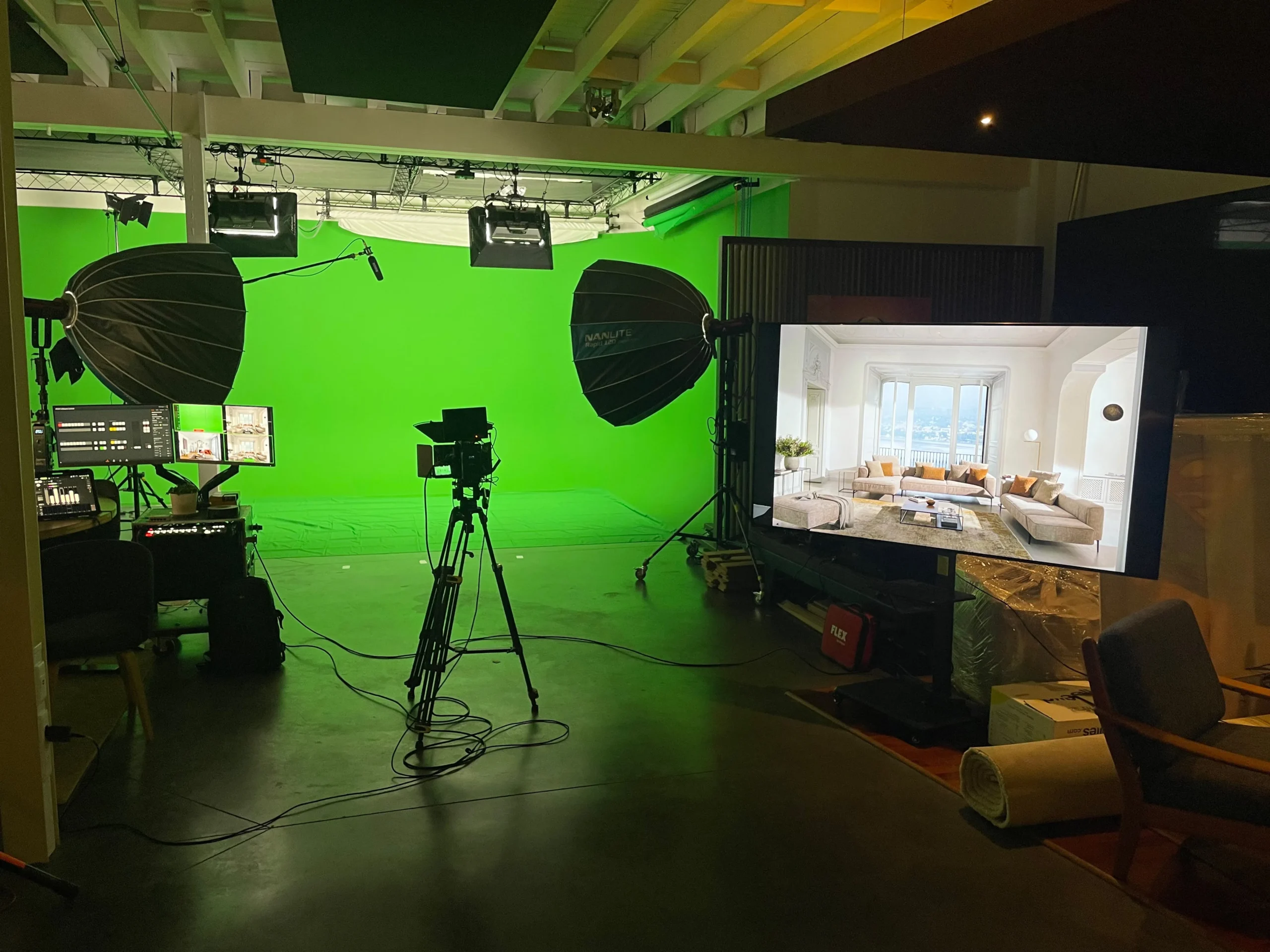
For many B2B teams, the decision to skip podcasts or video entirely comes down to one thing: production capacity. Scripting, recording, editing, sound engineering, formatting for multiple platforms, and managing distribution is a full workflow. Most marketing teams don’t have the in-house bandwidth, and coordinating multiple vendors for each piece adds friction that compounds across every episode or shoot.
Working with a full-service studio like StreamBox can reduce that production friction significantly. The end-to-end model covers everything from concept to multi-platform publication. Batch-recording sessions let a team produce weeks of podcast or video content in a single half-day. For brands that want broadcast-ready audio and video without building an in-house team, that kind of production partner changes the format economics considerably. Reach out to the StreamBox team to see how a batch-production session could work for your content calendar.
What each format realistically costs to produce
The production cost spectrum across five formats
Anchoring your budget to realistic ranges matters before committing to any format. A single podcast episode runs $750 to $1,500 at a professional mid-range for freelance or agency production. A webinar runs $1,500 to $3,000. A long-form SEO article runs $600 to $2,500. A short-form video runs $800 to $2,500. A brand video starts at $15,000 and scales well beyond $50,000 depending on scope, crew, and post-production complexity.
The medium estimate is the honest planning number for any format that involves professional execution, review rounds, and publication. Low estimates apply only to templated or repurposed work. High estimates apply when the asset involves executive input, custom design, original research, multi-camera video, or complex approval chains. Budget to the middle and treat the low end as a bonus, not a baseline.
The repurposing leverage point every budget plan ignores
The most efficient production strategy isn’t choosing the cheapest format. It’s choosing the format with the highest repurposing yield. A 45-minute podcast episode can become a short LinkedIn clip, a blog post, a newsletter section, and three social graphics without a single additional recording session. A webinar can become an on-demand asset, a case study, and a sales follow-up email sequence.
When you factor repurposing into format ROI, higher-investment formats like video and webinars often deliver a lower effective cost per asset than producing each piece separately. A brand that treats its podcast as a pillar and atomizes every episode into platform-specific derivatives is operating a content system, not a content calendar. That’s the difference between content that creates compounding returns and content that disappears after a week.
- Podcast episode (45 min): full episode, three LinkedIn clips, one blog post, two quote graphics, one newsletter section
- Webinar (60 min): on-demand replay, executive summary, three short clips, one email follow-up sequence, one case-study outline
- Brand video (3 min): full cut, 60-second social edit, 15-second awareness clip, landing page embed, sales email asset
Building your B2B format stack for the next 90 days
Picking your foundation format based on resources and funnel stage
Start with one format you can execute consistently at quality, not the format you think you should be doing. For teams with strong writing resources and time to wait for organic traction, long-form articles are the most scalable foundation. For teams with executive voices and product insight worth sharing, a podcast or webinar series builds trust faster. For teams with visual stories and proof of results to communicate, video is the highest-leverage investment once production is solved.
Don’t try to build every format simultaneously. Build depth in one before expanding. A consistent podcast series almost always outperforms a sporadic presence across five formats, because buyers make decisions based on repeated exposure to your perspective, not isolated content encounters.
How This B2B Content Format Comparison Informs Funnel Strategy
Track three numbers per format:
- Engagement rate, how many people interact beyond a pageview or play
- MQL conversion rate, how many leads come from that format per month
- Sales-cycle influence, which formats appear in the deal history of your fastest-closing opportunities
Most teams measure traffic. The teams that improve pipeline measure which formats move buyers forward, and they use that data to align the best B2B content formats by funnel stage rather than defaulting to what’s easiest to produce.
Set a 90-day baseline for each format you run, then compare results against the benchmarks in this guide before deciding what to scale and what to cut. A format that drives low traffic but consistently appears in closed deals is worth more than a format with high impressions and no pipeline influence. That’s the distinction between content that feels productive and content that actually is.
Choosing your format mix is a strategic decision, not a creative one
The five formats covered here each have a distinct role, a distinct cost, and a distinct conversion profile. Long-form articles compound organically over time. Social content amplifies reach in the short term. Podcasts build trust with consideration-stage buyers who invest their attention. Webinars generate some of the most qualified leads per session. Video does the most work across the full funnel when production quality is there to support it.
No single format wins universally. The strongest B2B content programs pick formats that match their buyer stage, production capacity, and distribution strategy, then measure what moves pipeline rather than what generates impressions. That’s not a content calendar problem. It’s a format strategy problem, and it’s solvable once you’re evaluating formats against the right four dimensions. Use this B2B content format comparison to build a 90-day plan that moves buyers through the funnel, one well-matched format at a time.
If you’re ready to add podcast or video to your format stack without the production burden, get in touch with the StreamBox team. One batch session in a professional studio can produce enough content to sustain a 90-day distribution plan across every platform your buyers use.