Every B2B marketing team eventually hits the same wall: a limited content budget, two compelling formats on the table, and a decision that carries real pipeline consequences. Podcast or video? The instinct is to pick one and commit. But that framing misses the actual question, which isn’t which format is better in the abstract. It’s which format serves which buyer at which stage of the buying process.
At StreamBox, we’ve been producing both formats simultaneously for B2B brands across Europe for years. The data tells a more nuanced story than most “podcast vs. video” takes admit. Buyer stage, distribution channel, production cadence, and measurement architecture all shape the outcome more than the format itself. This article maps each format to the funnel, compares real engagement and lead benchmarks, breaks down realistic production costs, and closes with a 60-day test framework you can run right now, so you can finally answer whether a podcast or video is better for your B2B lead generation program.
How podcasts and video each map to the B2B buyer journey
The format question is really a funnel question. Each content type has a different gravitational pull on the buyer journey, and confusing their roles is the root cause of most disappointing campaign results.
Where podcasts build the pipeline you can’t see yet
Long-form podcasts anchor the awareness and early consideration stages. They work before a buyer starts actively evaluating vendors, building familiarity and trust through repeated listening sessions over weeks or months. According to Visable’s European research, 66% of decision-makers find podcasts valuable in the early phase of the buying process, and LinkedIn data puts that figure at 64% for B2B buyers broadly. These aren’t conversion assets. They’re pre-intent assets that warm the pipeline before a buyer even knows they’re in one.
A buyer who has consumed six episodes of your branded podcast on supply chain risk before they ever visit your website is not a cold lead. They arrive already familiar with your perspective, your language, and your point of view on their problem. That changes the entire sales conversation.
Where video closes the gap between interest and decision
Short-form video dominates awareness by validating pain points quickly and generating reach across social channels. Long-form video, including webinars, demos, and case study interviews, carries its weight in the consideration and decision stages, when buyers need to compare solutions and reduce perceived risk. A buyer who discovers your brand through a podcast episode is often a warmer lead by the time they reach a video demo. The two formats don’t compete; they sequence.
Engagement rates and content longevity compared
Moving from the conceptual framework to measurable performance separates strategic content thinking from guesswork. The numbers here are specific enough to actually inform production decisions.
Podcast completion vs. video retention in B2B contexts
B2B branded podcast episodes average 80, 90% completion rates, according to published sample benchmarks. Comparable branded video content sits at roughly 12% watch-through. That gap isn’t just a curiosity; it has direct implications for message delivery. Completion rate is a proxy for how much of your content actually reaches the audience, not just how many people clicked play. A podcast listener who finishes an episode receives the full argument, the full CTA, and the full brand impression. Video almost never delivers that at scale. It’s worth noting that other studies report podcast completion in the 60, 70% range depending on episode length and audience type, so treat the higher figure as a strong-performer benchmark rather than a universal floor.
The practical implication is that if your content strategy depends on a specific message landing, audio has a structural advantage. Your listener is usually doing something else while they listen, making the medium less intrusive and more likely to be consumed in full.
Which format stays relevant longer
Podcasts function as evergreen assets when they’re topic-led and properly SEO-titled. A well-produced episode on a B2B challenge can generate qualified downloads for months or even years after publication, with documented evidence of long-tail download patterns and seasonal spikes well beyond the launch window. Social video has a much shorter organic lifespan, typically peaking in reach within the first few days of posting. Long-form case study and demo videos hosted on YouTube are the exception, sustaining search traffic over time when they’re optimized correctly.
Content longevity changes the cost-per-impression argument significantly. A podcast episode that generates downloads for 24 months amortizes its production cost over a far longer period than a LinkedIn video that peaks in week one and flatlines by week two.
Lead quality and pipeline impact: what the data actually shows
This is where most “podcast vs. video” articles get vague. The benchmarks exist, and they’re worth examining honestly, including where the attribution is clean and where it isn’t.
Podcast-driven B2B lead benchmarks
The documented benchmarks for podcast-driven B2B lead generation are more specific than most marketers expect. Average guest-to-client conversion rates sit at around 10%, with tightly targeted programs reaching 25, 35%. Listener-level conversion benchmarks at 1, 3% MQL per episode for most campaigns, with CTA-specific conversion observed at approximately 4.7% in certain program types. In European B2B campaigns, particularly in the DACH region, cost per lead runs €45, €87. One concrete case study tracked 12 podcast appearances that generated 523 landing page visits, 89 demo requests, and £67K in pipeline. That’s documented, attributed revenue from audio content, not a projection.
Video campaign outcomes and the attribution challenge
The video evidence deserves to be presented honestly. One enterprise B2B video campaign produced more than 10,000 YouTube views within 30 days with associated pipeline generation, but the attribution was campaign-level rather than video-isolated. Video typically shows stronger correlation with decision-stage outcomes, specifically demos requested after a buyer watches a case study video, but weaker standalone attribution across the full funnel. This isn’t a weakness of video as a format. It’s a measurement architecture problem that most B2B teams haven’t fully solved, and it’s worth naming clearly rather than pretending the data is cleaner than it is.
Production costs and distribution reach for European B2B brands
Budget conversations require real numbers, not ranges so wide they’re useless. Here’s what each format actually costs and where the qualified leads tend to come from.
What each format realistically costs to produce
A weekly B2B podcast, outsourced to a professional agency, runs $1,500, $4,000 per month, or roughly $500, $1,500 per episode. The total workflow for an audio-only episode runs 7, 12 hours; a video podcast version adds post-production complexity and typically reaches 12, 20 hours per episode. A polished branded video running three to eight minutes costs 30, 50% more per finished asset due to camera setup, lighting, color correction, motion graphics, and multi-format exports.
Batch production changes this math substantially. Recording four podcast episodes in a single half-day session, the model StreamBox runs with most ongoing clients, reduces the per-episode cost and eliminates the recurring scheduling overhead that quietly inflates production budgets over time. That efficiency gain is one of the strongest practical arguments for treating content production as a system rather than a series of one-off projects.
Which distribution channels drive the most qualified B2B leads
For both formats, LinkedIn tops the channel ranking for lead quality in European B2B contexts. Professional targeting by role, company size, and industry makes it the non-negotiable launch pad for any B2B content program. Email follows closely for nurturing known audiences and pushing qualified contacts toward a next step. YouTube delivers strong discovery and long-tail search intent for both video and audio-repurposed content. Podcast directories like Spotify and Apple matter for reach and availability but rank lower for direct lead qualification, since they offer less intent-signal targeting than LinkedIn or email.
Repurposing as the bridge between audio and video
The “either/or” framing breaks down the moment you understand how much content one production session can generate across both formats. This is where the practical case for a studio partner becomes clear.
How one format feeds the other
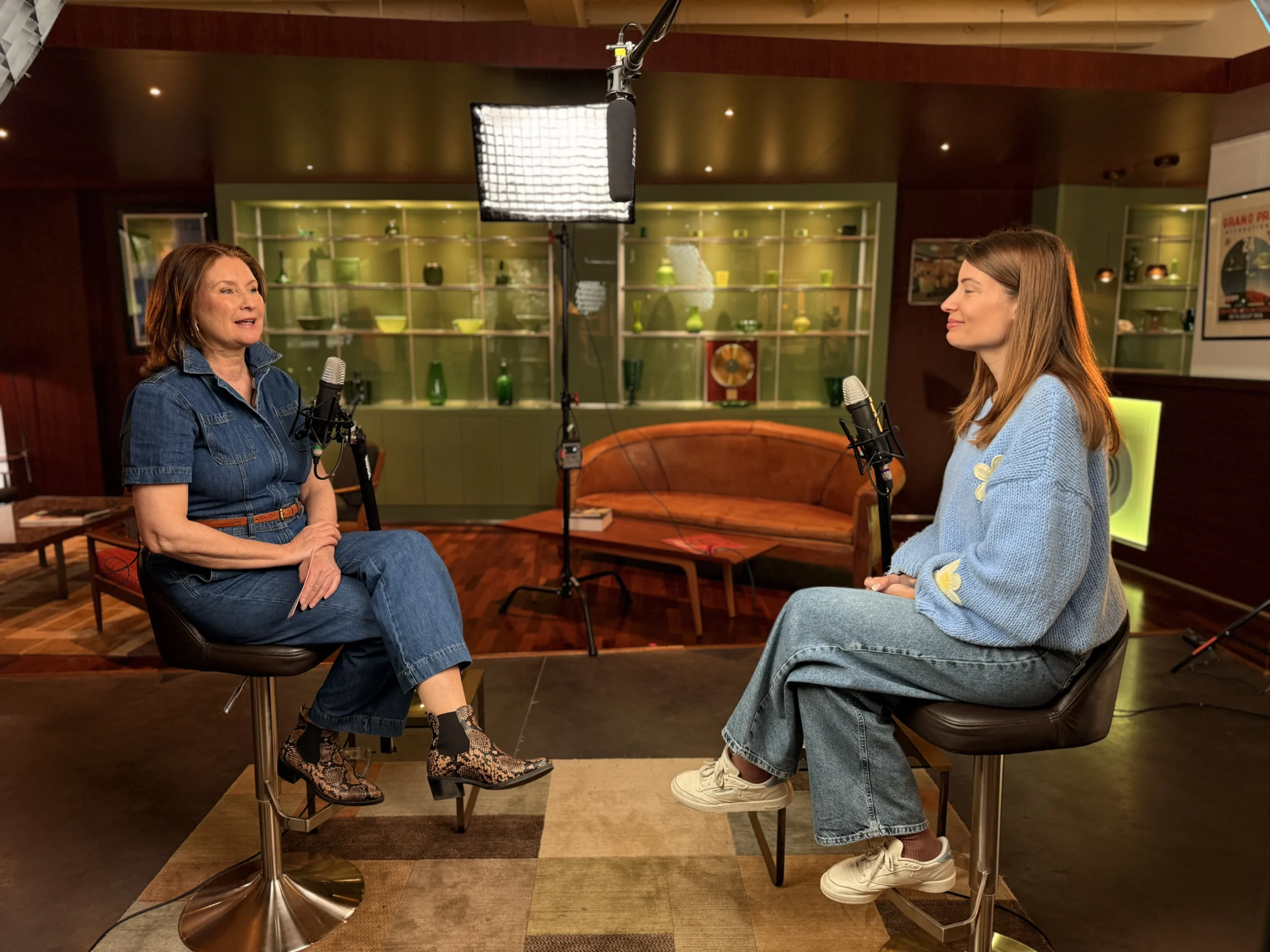
A recorded podcast episode is already a video asset if it’s shot on camera. Strip the audio for Spotify and Apple, post the full video to YouTube, clip 60-second highlights for LinkedIn, and pull key quotes for email nurture sequences and blog pull-quotes. A single production session can populate YouTube, LinkedIn, podcast directories, email, and paid ad creative simultaneously. The reverse works identically: a polished short video interview becomes a podcast episode with a simple audio export. The formats aren’t competitors; they’re two outputs of the same production session.
Most B2B teams treat audio and video as separate workflows because they’ve never experienced a production setup designed to capture both simultaneously. Once that system is in place, the “we can only afford one format” constraint disappears entirely, because the incremental cost of the second format drops dramatically.
Batch production as the efficiency multiplier
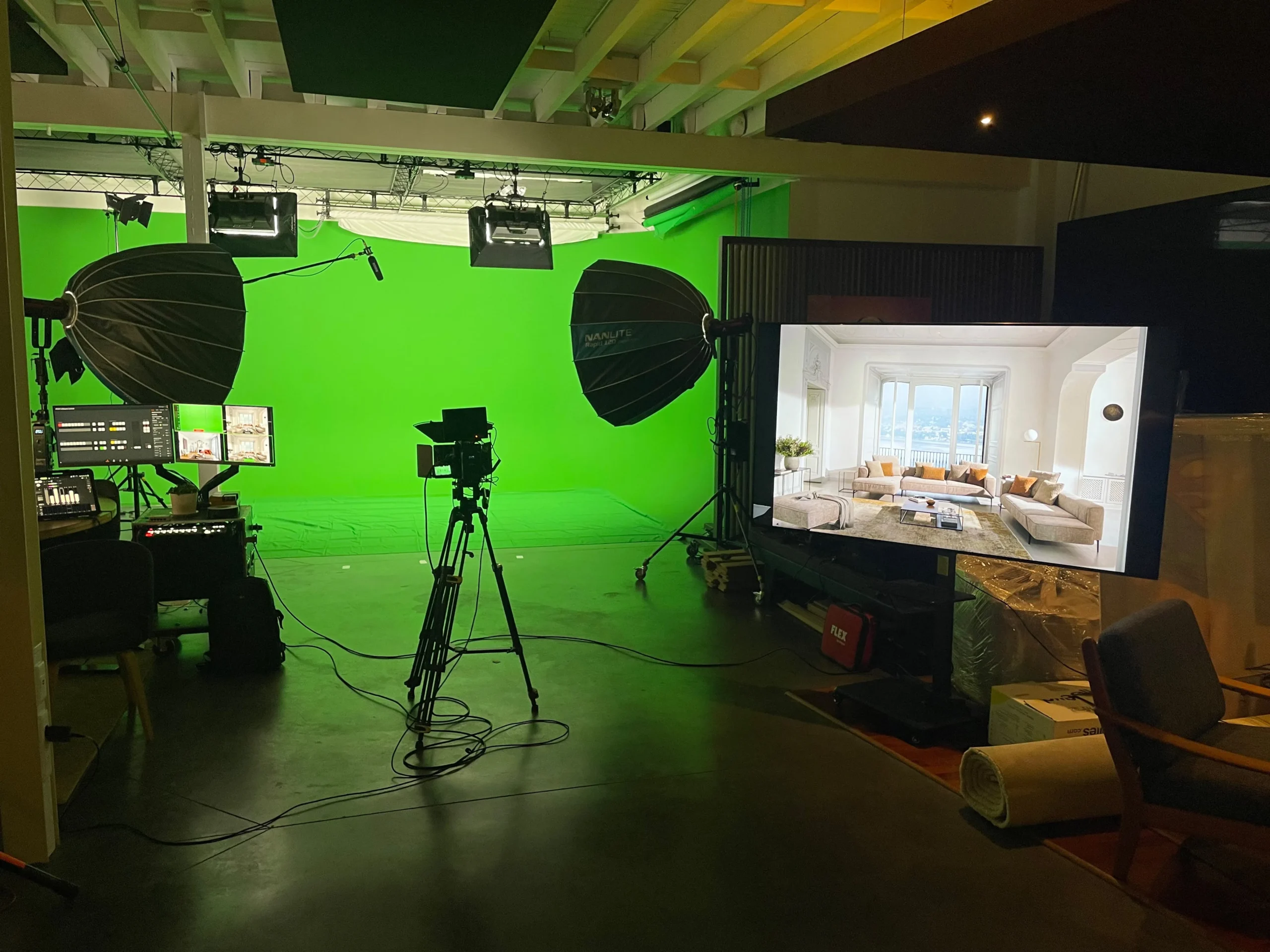
Teams working with a full-service studio partner gain a structural advantage here that’s difficult to replicate with freelancers or in-house setups. Producing four podcast episodes in a single half-day session generates a month of content across both audio and video channels, complete with clips, show notes, and formatted assets for each platform. That’s the model StreamBox was built around: one point of contact, one studio session, and a month’s worth of broadcast-ready content delivered across every channel your buyers actually use.
A simple testing framework to find your format answer
The benchmarks in this article tell you what’s typical. Your audience will tell you what works for your specific pipeline. Here’s how to find out in 60 days without wasting budget on inconclusive tests.
Running a 60-day format test
Choose one primary KPI per format before you launch anything. For video, that’s demo requests. For podcast, that’s content downloads or meeting bookings. Produce two podcast episodes and two short-form videos on the same topic or buyer pain point, so the content variable is controlled.
Distribute both through LinkedIn and email to comparable audience segments, not the same list, but segments with similar firmographic profiles and funnel stages. After 60 days, compare qualified leads: did the contact match your ideal customer profile? Did they take a next-step action? Keep in mind that meaningful conclusions require sufficient audience volume; with fewer than a few hundred contacts per segment, differences in outcome may not be statistically significant.
Metrics that actually tell you something useful
Track cost per lead, ICP match rate, and pipeline stage reached per content source. Ignore vanity metrics entirely. Total downloads and total views are not lead generation signals; they’re reach signals, and reach without conversion doesn’t move pipeline. A podcast that generates 200 downloads and 12 demo requests outperforms a video that generates 5,000 views and 3 form fills, every single time. Measure lead quality, not content popularity. This framework applies whether you’re running both formats simultaneously or testing one at a time, and it gives you data you can actually act on in the next planning cycle.
The format that fits your pipeline
Neither audio nor video is universally better for B2B lead generation. The format that converts depends on the buyer stage you’re targeting, the distribution channel you prioritize, and the production consistency you can sustain over time. Podcasts earn trust before the buyer is actively looking; video accelerates decisions once they are. European B2B brands running both formats strategically, with proper distribution and repurposing built in, consistently outperform those committed to just one.
The good news is that “doing both” doesn’t require double the budget. Repurposing and batch production make it operationally realistic for most mid-size B2B marketing teams. What it does require is a production partner who can manage both workflows from a single session, with the editorial direction, technical setup, and distribution infrastructure to turn one half-day in the studio into weeks of multi-platform content.
That’s exactly the model StreamBox was built to deliver: one studio, one team, both formats, from brief to publication. If you’re ready to stop guessing which format works and start measuring it properly, reach out to our team to explore how a dual-format content program could fit your pipeline goals. A discovery call takes 30 minutes and typically clarifies which format fits your pipeline stage.