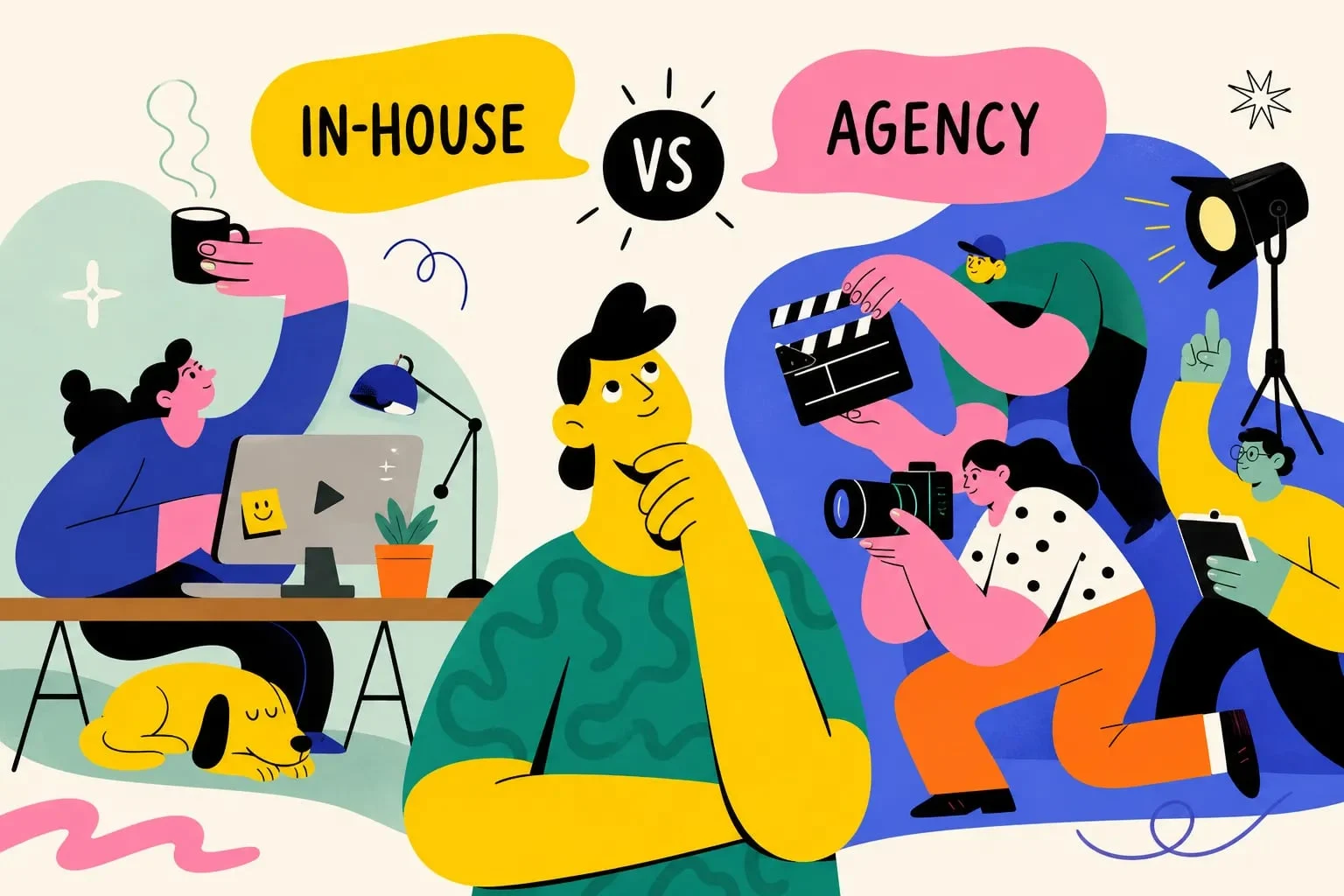
You brief your internal team on a brand video in January. By March, you’re still waiting on the final cut, the original scope has doubled, and the result looks like it was shot on someone’s lunch break. Many marketing teams report similar experiences when producing video in-house, largely due to limited resources and bandwidth. The core problem isn’t effort or talent. Video production at a professional standard requires specialized infrastructure, crew, and workflows that most internal teams don’t have, and building that capacity from scratch is rarely practical or cost-effective.
Understanding the real corporate video agency benefits starts with recognizing what a full-service studio actually delivers. Working with a dedicated corporate video agency changes that equation entirely. A full-service studio handles every stage of the production chain, from creative development and scripting through filming, post-production, and multi-platform publishing. StreamBox is built around this model: a single point of contact, one team, one workflow from brief to publication. The result is better content delivered faster, with far less coordination overhead on the client side.
Below are seven concrete benefits companies gain when they partner with a corporate video agency, including several that an internal team is structurally unlikely to replicate.
1. Professional Equipment and Studio Infrastructure That Internal Teams Can’t Match
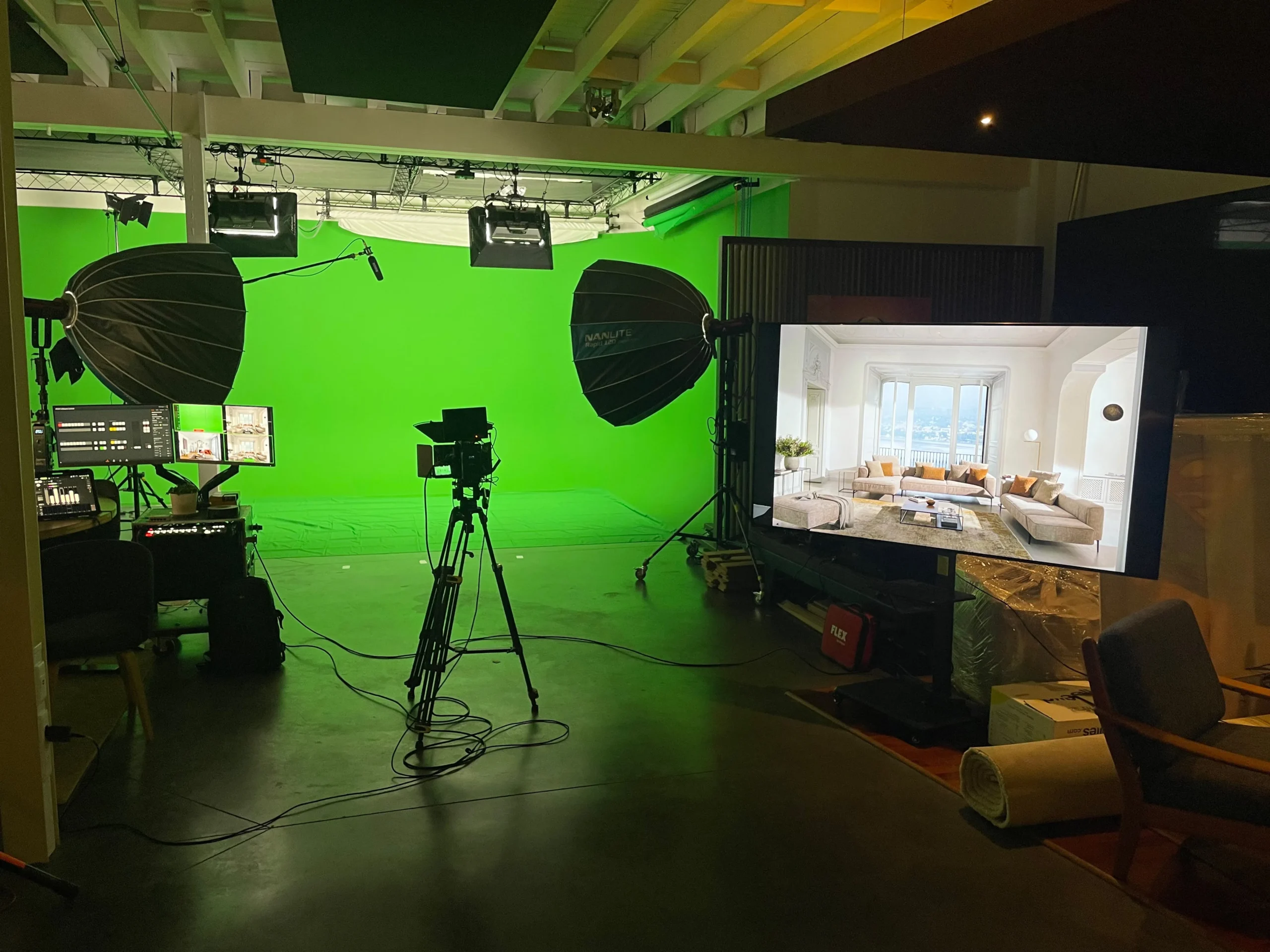
Most marketing departments don’t own cinema-grade cameras, broadcast lighting rigs, professional audio setups, or controlled studio space. Equipment rental can be a significant line item relative to smaller budgets, and having the gear without the expertise to use it adds nothing. Agencies come with all of it already in place, maintained, and operated by specialists who use it daily.
The infrastructure difference shows up directly in the final product. Variables that quietly kill video quality, inconsistent lighting, background noise, and poor framing, are substantially reduced in a purpose-built studio environment. StreamBox’s 440m² production facility near Brussels is engineered around broadcast delivery, which means every video produced there carries the visual and audio consistency that builds brand credibility over time. A single great video matters; a series of consistently excellent videos is a brand asset.
2. Editorial Direction That Shapes the Message, Not Just the Footage
Pointing a camera at a spokesperson and pressing record produces footage. A corporate video agency produces a story. The difference is editorial direction: knowing what the viewer needs to feel, believe, and do after watching, and building every creative decision around that goal. Agency creative teams bring scriptwriting, messaging frameworks, and cross-industry storytelling experience that most internal teams take years to develop, if they develop it at all.
Creative consistency across a content series is where this advantage compounds. Agencies build style guides at the start of a project, covering visual identity, tone, pacing, and messaging that scale across every episode or deliverable. This eliminates revision spirals driven by inconsistent expectations and ensures that a brand’s tenth video feels as intentional as the first. For companies running ongoing content programs, that consistency is a genuine business advantage and one of the clearest benefits of hiring a corporate video agency.
3. Corporate Video Agency Benefits: Faster Turnaround and Predictable Delivery
A 30-second social ad moves from brief to delivery in two to three weeks with an experienced agency team. A two-to-three-minute brand video typically lands in four to six weeks. Internal teams managing production alongside their regular workload often take substantially longer, not because they’re slow, but because production isn’t their primary job. Agencies dedicate production capacity, keep crew and resources in-house, and run pre-production concurrently with client approvals to protect delivery dates.
The biggest timeline variable isn’t filming; it’s approval speed. Experienced agencies build review rounds into the production schedule rather than treating them as additions at the end. That structural difference alone saves weeks on complex projects. For time-sensitive campaigns or quarterly content cycles, the reliability of an agency timeline is worth as much as the quality of the output itself.
4. Batch Production: Weeks of Content From a Single Shoot Day
This is where full-service agencies genuinely separate themselves from simple production vendors. Batch recording means planning multiple episodes or video assets into one concentrated shoot, then editing and distributing them over several weeks or months. A well-organized batch session in a controlled studio environment can produce three to six long-form videos plus ten to thirty derivative short-form assets in a single day. For brands running a weekly podcast series or monthly video newsletter, that output represents a full content pipeline built in hours.
The operational logic is straightforward. Crew, lighting, audio, and set are established once. Guests, topics, and formats are sequenced to minimize resets. Everything captured, b-roll, soundbites, and behind-the-scenes material, feeds into platform-specific edits after the shoot. StreamBox structures client engagements around this model, giving marketing teams weeks of ready-to-publish content in advance without requiring recurring shoot days. For most internal teams managing production alongside regular responsibilities, matching this kind of compressed output without dedicated resources or specialized capacity is genuinely difficult.
5. Multi-Platform Delivery and SEO Built Into the Production Workflow
A brand video produced for YouTube needs a vertical cut for TikTok and Instagram Reels, a square version for LinkedIn, and a 15-second teaser for paid ads. An agency that operates at professional scale plans for all of this at the pre-production stage, not as an afterthought. Shooting for one format and cropping later degrades quality. Building multi-format delivery into the original shoot protects every version of the asset.
Platform SEO is where most internal teams leave reach on the table. Companies invest in production and then publish with a generic title, no description, and no metadata strategy. Agencies that include distribution in their scope treat YouTube and podcast platforms as the search engines they are. Titles, descriptions, chapters, thumbnails, keyword targeting, and captions are not decorative, they determine whether a well-produced video gets found organically or sits at zero views indefinitely. Many full-service agencies, including StreamBox, build SEO optimization into the distribution workflow as a standard deliverable, which means content continues generating reach long after the publish date. These outsourcing video production benefits extend the value of every dollar spent on production.
6. Scalable Production Capacity and Dedicated Project Management
One of the clearest structural advantages of working with an agency is the ability to scale output without scaling headcount. A retainer or subscription model gives brands a defined monthly production capacity, consistent creative quality, and predictable costs. When a campaign performs well and leadership wants more content, the agency scales with the plan rather than triggering a new hiring process. For most fixed internal teams, replicating that flexibility quickly is difficult and often costly.
Most companies that attempt in-house production end up coordinating a freelance camera operator, a separate editor, an external sound engineer, and a distribution tool they’re figuring out as they go. A full-service agency eliminates that coordination burden by assigning a dedicated project manager who owns the entire workflow from kickoff to publication: scheduling, approvals, versioning, and delivery. Single-point-of-contact production reduces errors, protects timelines, and removes the communication overhead that makes multi-vendor production so exhausting.
7. Measurable ROI That Justifies the Investment, Corporate Video Agency Benefits in Numbers
Views are a reach metric, not a revenue metric. The most defensible ROI measures for agency-produced video connect directly to the sales funnel: lead-to-customer conversion rate, cost per qualified lead, influenced pipeline, close rate, and sales-cycle length. Industry benchmarks consistently show that companies using professional video on focused landing pages can see conversion-rate lifts in the range of 20 to 80%. Video-assisted B2B outreach has been linked to 25 to 45% higher response rates in multiple program studies. Some programs report sales cycles shortened by 30 to 50% when video is used consistently across the buyer journey.
The strongest ROI case comes from direct comparison: video-exposed audiences versus non-exposed audiences, measured through CRM data, tagged links, and platform analytics. Before engaging any production partner, establish baselines, current traffic, conversion rate, lead quality, win rate, and sales-cycle length. Then measure against those numbers after the video is deployed, by channel, by audience, and by campaign rather than as one blended figure.
A video-influenced pipeline worth three to five times the annual production spend is a realistic target for mature programs with strong distribution strategies. When evaluating agencies, ask for three case studies with before-and-after metrics, not testimonials. Ask specifically how they handle multi-platform distribution and SEO, whether batch production is part of their model, and whether a dedicated project manager is assigned from day one. Red flags include proposals that treat distribution as an optional add-on, agencies that don’t ask about your publishing cadence, and any team that can’t show performance data from previous client work.
The Right Agency Is a Strategic Content Partner, Not a Production Vendor
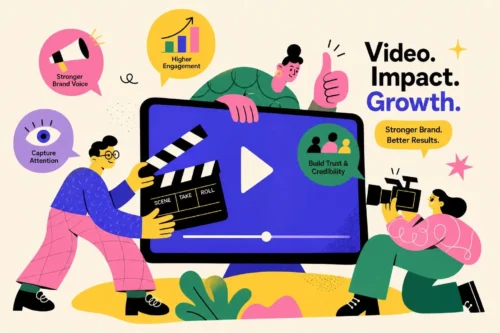
These seven corporate video agency benefits, professional equipment, editorial expertise, faster delivery, batch production, multi-platform formatting, SEO optimization, and dedicated project management, represent what a full-service agency actually delivers when it’s operating at the level your brand needs. The question isn’t whether to work with a corporate video agency. It’s whether the agency you’re evaluating treats video as a production task or as a strategic content operation.
The agencies that consistently deliver measurable video agency ROI are the ones that plan distribution before filming begins, batch content to build a pipeline, and assign one person to own the outcome from brief to publication. If your current setup doesn’t include all of those elements, it’s worth evaluating what a proper production partner could do for your content program. These corporate video marketing benefits are most apparent when production, distribution, and measurement operate as one integrated system. StreamBox offers a free consultation to help marketing teams assess their current video strategy and identify where professional production would have the most impact. Reach out to StreamBox to start that conversation.