Many teams decide to outsource video production when internal capacity hits a wall. The brief keeps growing: more formats, more platforms, more episodes, more assets per campaign. But internal resources, specialized equipment, and post-production expertise rarely scale at the same rate. The result often includes a growing backlog, inconsistent output, and a team spending more time coordinating logistics than shaping strategy.
Bringing in an external production partner isn’t a workaround for an underfunded team. For many organizations with low-to-moderate video volume, outsourcing video production is often the more cost-effective operating model. A full-service studio handles the entire production chain, from concept and scripting through filming, editing, and multi-platform delivery, so your team can focus on positioning, performance, and growth. That’s exactly what agencies like StreamBox are built to do: absorb the operational weight of production and hand back broadcast-ready content on a predictable schedule.
This article is a practical decision guide. By the end of it, you’ll know whether external production is right for your situation, what it realistically costs, how to pick the right kind of partner, and how to manage the workflow so the relationship actually delivers.
Signs it’s time to stop producing video in-house
The decision to bring in an external production team usually isn’t triggered by one big failure. It accumulates. Deadlines start slipping. Quality plateaus at “good enough.” The same person who writes the script is also running the camera, pulling the edit, and uploading to YouTube, which means every stage competes for the same limited hours.
The most reliable signal is inconsistency. When the quality of your videos varies significantly from one month to the next, that’s rarely a talent problem. It’s a structural one. Without dedicated post-production infrastructure, proper color grading, sound engineering, and multi-format delivery, the output depends entirely on whoever is available and how much time they have. That’s not a content system; it’s improvisation.
When capacity becomes the constraint
Shooting weeks out because the same person writes, films, edits, and publishes is a content backlog waiting to happen. When production tasks consume the team’s hours, publishing windows get missed, campaign assets arrive late, and content velocity drops across every platform. The opportunity cost isn’t just the delayed video; it’s the strategy work that didn’t happen because someone was color-correcting footage.
A distributed, cobbled-together freelancer network solves part of this, but it creates its own coordination burden. Every project restarts the briefing, contracting, and calibration process. Consistency suffers, and the total time cost often exceeds what people expect.
The real cost of keeping it in-house
The fully loaded annual cost of a single in-house producer who can shoot and edit typically falls between $110,000 and $175,000 after accounting for salary, benefits, equipment, software, storage, and overhead. A two-person producer-editor setup can reach $250,000 to $440,000 in the first year, including the initial gear investment. Those numbers don’t include idle capacity during slow periods or the cost of skills the team simply doesn’t have.
Outsourcing video creation shifts that to a predictable per-project or retainer model. At fewer than 10 to 15 substantial videos per year, external production is almost always more cost-effective. The calculation shifts at higher volumes, but for most mid-market brands, the financial case for hiring a production studio is clear.
When to outsource video production: reading the right signals
Beyond capacity and cost, certain strategic situations make the case for outsourcing especially compelling. A product launch requiring a suite of assets across formats, a rebrand that demands visual consistency across dozens of deliverables, or a content strategy that calls for weekly publishing, any of these can outpace what an internal team can reliably handle. Post-production outsourcing is also worth considering on its own: some teams can shoot effectively in-house but lack the editing infrastructure to turn raw footage into polished, platform-ready content at scale.
Remote video production services have made this even more accessible. You no longer need a studio in your city to get professional results. A well-structured engagement with a remote production partner can deliver the same consistency and turnaround as an on-site relationship, provided the brief, tooling, and feedback processes are properly set up.
What outsourcing video production actually costs
The price range for professional video production is wide because the scope varies enormously. A short social clip is not the same problem as a brand film. Before approaching any vendor, you need a realistic number in your head, not a rough ballpark.
Here’s how costs generally break down by format in 2026. Short social clips and vertical content typically run $500 to $5,000 per asset, depending on production requirements. Professional explainers, whether live-action or animated, range from $3,000 to $15,000 for standard work, with premium animated productions exceeding $50,000. Standard corporate video production sits between $5,000 and $20,000. Long-form content, documentary-style production, and full campaign packages start around $10,000 and can exceed $50,000 for premium output.
Price ranges by video type
The variables that push cost upward are consistent: additional shoot days, animation, on-screen talent, multiple locations, custom motion graphics, extensive revision rounds, and usage rights for paid media or broadcast. A talking-head interview recorded in a studio with one shoot day is a different budget conversation than a multi-location brand film with scripted sequences and regional talent.
Per finished minute is a common benchmark for corporate and training content, with standard work falling around $1,000 to $5,000 per minute. Complex animation and premium live action sit above that range. These figures should inform your internal planning before you ask a vendor for a quote.
How to outsource video production: pricing models worth knowing
Fixed project fees, monthly retainers, and batch content packages each suit different production rhythms, here’s how to choose. Fixed project fees work best for defined, one-off productions where scope is clear before work starts. Monthly retainers, typically ranging from $1,500 to $5,000 or more, suit brands publishing regularly who need predictable output. Batch content packages are the most efficient option for teams who need weeks of content without weeks of production time: one focused session captures multiple episodes or assets, and shared setup costs can reduce the per-video price by 20 to 50% compared with individual one-off projects.
Recording multiple podcast episodes or shooting several video formats in a single half-day session is a core part of how studios like StreamBox help clients build a content calendar without constant production friction. It’s the model that turns one session into a month of published content.
How to choose the right video production partner
Freelancers, boutique agencies, and full-service studios solve different problems, and choosing the wrong one for your situation creates as many issues as it resolves. Freelancers are the right fit for editing-only work, or post-production outsourcing support, when you control the brief, the footage, and the creative direction. The coordination burden is high, and quality consistency depends entirely on the individual. Boutique agencies offer stronger craft and a more defined creative process, but they often have narrower scope and limited capacity to scale.
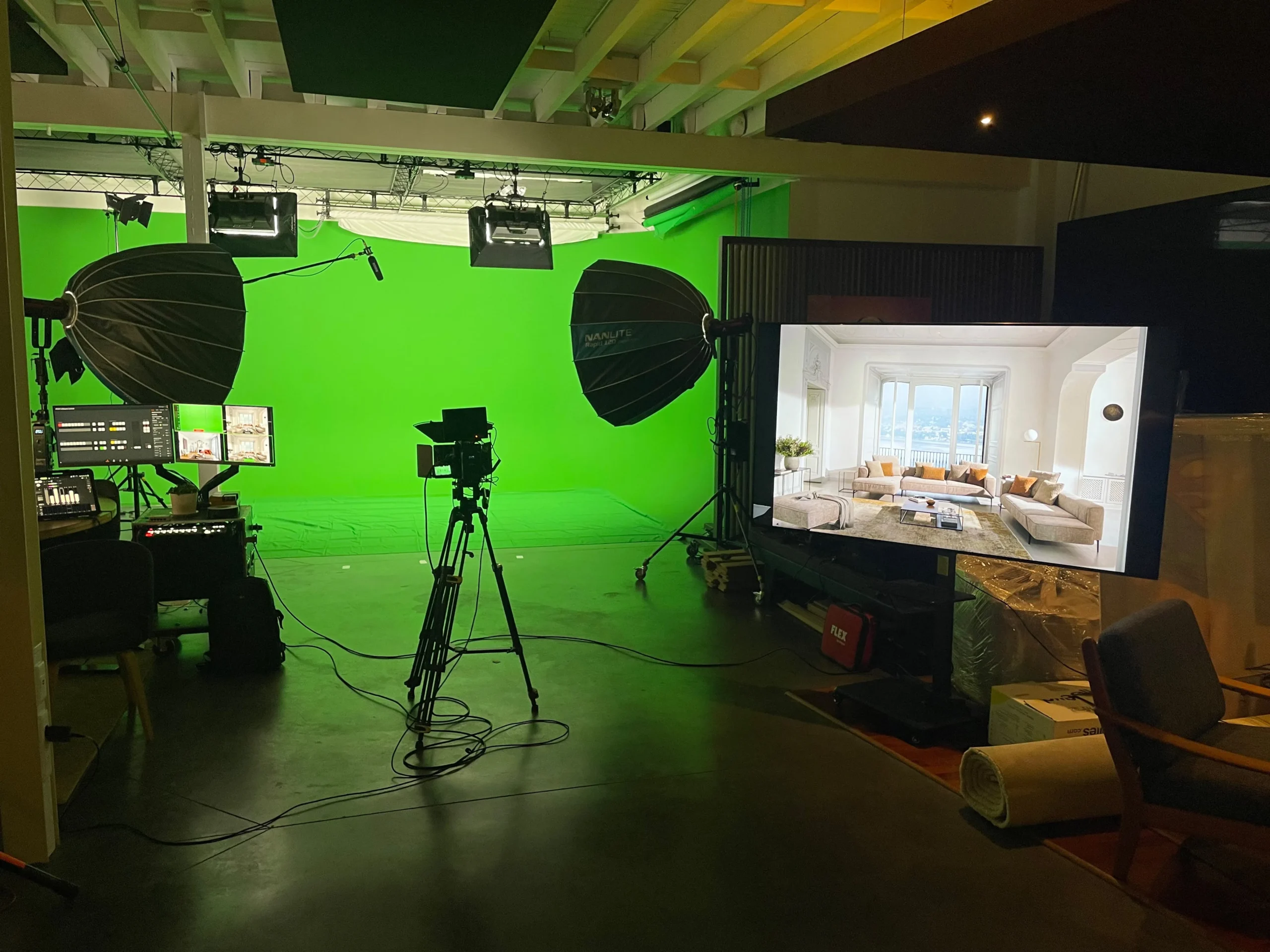
Full-service production studios handle the entire chain: concept, scripting, filming, post-production, and distribution. That model removes the operational burden entirely rather than just delegating a single task. StreamBox is built around this approach, offering dedicated project management per client, an in-house studio, and end-to-end delivery across platforms. For brands that need consistent, broadcast-ready content without building an internal production team, that’s the relevant comparison.
Provider types and where they fit
Freelancers make sense when the client owns the creative process and needs execution support. Boutique agencies are a better fit for defined campaigns with clear direction and a project with a visible end date. Full-service studios are the right choice when the brand needs an ongoing content system, a single point of contact, and output that scales without adding headcount. Coordinating three separate freelancers for scripting, filming, and editing is still production management, it just sits inside your team rather than outside it.
What separates a good vendor from a great one
Genuine end-to-end capability means scripting through distribution, not just showing up with a camera. Ask specifically how they handle those stages. “We can do everything” is a common claim; a clear answer about how they approach a client’s distribution strategy or sound engineering is a better signal.
Other factors worth verifying: portfolio depth in your category, dedicated project management on your account, multi-format delivery across platforms, and a reliable turnaround track record. Red flags include vague deliverables in proposals, no named team members, and pressure to sign before scope is defined. When you hire a video production company, the clarity of their process during the sales conversation is usually a reliable preview of how they’ll behave once the project is underway.
Writing a brief that gets the video you actually want
Scope creep and revision cycles almost always start with an incomplete brief. When the production team fills in gaps with assumptions, the first cut rarely lands where the client expected it to. A strong brief doesn’t just save time; it protects the timeline, the budget, and the relationship.
A complete creative brief should cover all of the following:
- The one-sentence core message the video must land
- The audience definition, including platform and intended action
- Tone and visual style, with reference examples
- Brand guidelines and any required or prohibited claims
- The distribution plan, with specific platforms and launch timing
- Technical requirements, including aspect ratios and resolution standards
The brief should answer the production team’s questions before they have to ask them.
What belongs in your creative brief
Every element you leave out of the brief becomes a question during production or a surprise in the first cut. Audience definition and platform context are the most commonly omitted sections, and they’re the ones that determine whether the pacing, format, and tone actually fit the use case. A video for LinkedIn executive audiences is a different creative problem than the same message cut for TikTok.
Include reference assets, examples of work you admire and work you want to avoid, and an explicit approval process. Identify who gives final sign-off, how feedback is consolidated, and what the response window is. A clear brief is also a production schedule protection document.
Deliverables and rights to define upfront
Build a deliverables matrix before production starts: one row per asset, listing runtime, aspect ratio, caption version, file format, and due date. Avoid vague terms like “social cutdowns.” Name every asset explicitly. Final video copyright, raw footage ownership, and editable project files are three separate things, and they should be addressed separately in the contract. Usage rights, including territory, duration, and paid media permissions, must be defined before production begins. Discovering these gaps after delivery creates disputes that are difficult and expensive to resolve.
Managing the relationship once production starts
Remote and external production teams work best inside a simple, consistent system. The core tooling doesn’t need to be complex: cloud storage for media with proxy streaming and version history, a project management platform for tasks and milestones, and a frame-accurate review platform for client approvals. The specific tools matter less than disciplined, consistent usage. One review link per version, one documented approval per milestone, and all feedback in one place rather than scattered across email and chat. Tool selection may vary based on team size and workflow complexity, but the discipline around how tools are used matters more than which ones you choose.
Consolidated feedback is the single biggest factor in keeping projects on schedule. A stream of individual comments sent across several days is not a revision round; it’s a moving target. Structure your feedback as one consolidated batch per stage, categorized clearly by what’s blocking, what’s required, and what’s optional.
Tools that keep remote production on track
For most marketing teams, a practical stack for white-label video production or direct outsourced workflows includes cloud storage with proxy streaming, Asana or Monday.com for production tracking, and Frame.io or Wipster for timecoded video review. These tools give the production team everything they need to move efficiently and give you full visibility into where each asset stands. Asynchronous workflows extend that visibility across time zones without requiring everyone in the same meeting.
Realistic turnaround expectations by format
Social clips: first cut in one to three business days, final delivery in two to five business days. Two-to-five-minute explainers: first cut in three to seven business days, final delivery in seven to fourteen business days. Full promotional videos: four to eight weeks end-to-end, including pre-production. These timelines assume organized source files and timely, consolidated feedback. Late approvals and scattered comments are the most common reason projects slip, not production capacity.
Measuring whether your outsourced video investment is paying off
Most teams judge video performance by gut feel or view counts. Neither tells you whether the investment is generating business results. A useful ROI framework covers production efficiency, audience engagement, funnel conversion, and pipeline impact, tracked consistently over time.
Start with cost per finished video as your baseline efficiency metric. Compare it with what the same output would cost in-house, including the loaded cost of internal time, equipment, and software. Then measure content velocity: how many videos are you publishing per quarter now versus before? Increased velocity at consistent or lower cost per asset is the first indicator that the model is working.
Metrics that reveal actual production ROI
Platform performance metrics give you the engagement signal: YouTube watch time and SEO rankings, podcast downloads, LinkedIn video engagement rate, and paid social completion rates. These tell you whether the content is generating reach, not just being produced. Beyond engagement, the business metrics that matter most for B2B are video-influenced pipeline value, win-rate lift on opportunities where video was a touchpoint, and sales-cycle compression. A customer story or product demo that shortens the average days-to-close is generating measurable revenue impact, even if direct attribution is complex.
Knowing when to scale or switch
Scale the relationship when quality is consistent, turnaround is faster than in-house production could manage, and the content calendar is growing without friction. Those are signs the partnership is functioning as a strategic content engine. Switch when deadlines are repeatedly missed, quality varies across deliverables, communication is slow or evasive, or the vendor can’t grow with your output needs. The right external production partner should feel like an extension of your team, not a separate vendor requiring constant management.
Making this work from day one
The decision framework is straightforward. Outsource video production when internal capacity or quality has hit a ceiling. Choose a partner based on genuine end-to-end capability, not price alone or a polished showreel. Brief precisely, using a deliverables matrix and clear rights language. Manage with consistent tools and realistic timelines. Measure what actually drives business outcomes, not just what’s easy to count.
The best outsourced video production relationships remove the operational burden entirely. Your team gets back the hours spent on logistics, coordination, and post-production, and redirects them toward distribution, performance analysis, and campaign strategy. That’s where marketing leverage actually comes from.
If you’re ready to move from a fragmented process to a reliable content system, the StreamBox team manages the full production journey, from initial concept through editing, optimization, and delivery across every platform you publish on. Reach out to start a conversation about what your production calendar actually requires.