Most marketing managers have experienced this when exploring corporate video production: you reach out to a production company, request a quote, and get back a number that feels either too low to trust or too high to justify. Then you contact another agency and receive a completely different figure for what sounds like the same deliverable. The price gap isn’t random. It reflects real differences in crew size, pre-production depth, post-production scope, and how many hands touch the project from start to finish.
This guide breaks down the full corporate video production process so you know exactly what you’re paying for at each stage. You’ll find realistic budget ranges for the most common video types in 2026, accurate timeline expectations, a format selection framework, and a practical checklist for evaluating any agency you consider. Full-service studios like StreamBox, which manage the entire project from creative brief to final published asset, operate according to the same framework described here, so understanding the process helps you evaluate any production partner with confidence.
What corporate video production actually includes, start to finish
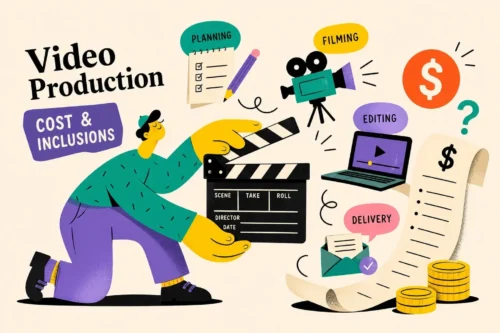
A well-run corporate video production is a structured, document-heavy operation long before a camera rolls. Most clients only see the shoot day, but that single day represents a fraction of the total work. Understanding the three-phase workflow tells you exactly what your budget is covering.
Pre-production: where most of the work happens before the camera rolls
Pre-production is the planning phase, and it’s the most consequential. This is where business objectives get defined, the target audience is profiled, the key message is locked, the script is written and approved, locations are scouted, talent is cast, and the shoot schedule is built. The core deliverables from a serious pre-production phase include a creative brief, an approved script, a shot list, a storyboard or visual reference, and a production schedule.
Weak pre-production is the single most common cause of budget overruns and reshoots. When the brief, script, and approvals aren’t fully locked before filming begins, teams end up revising during post-production, which multiplies editing time and often forces expensive additional shoot days. Thorough preparation before the shoot consistently reduces downstream costs and the risk of returning to set.
Production: the shoot itself
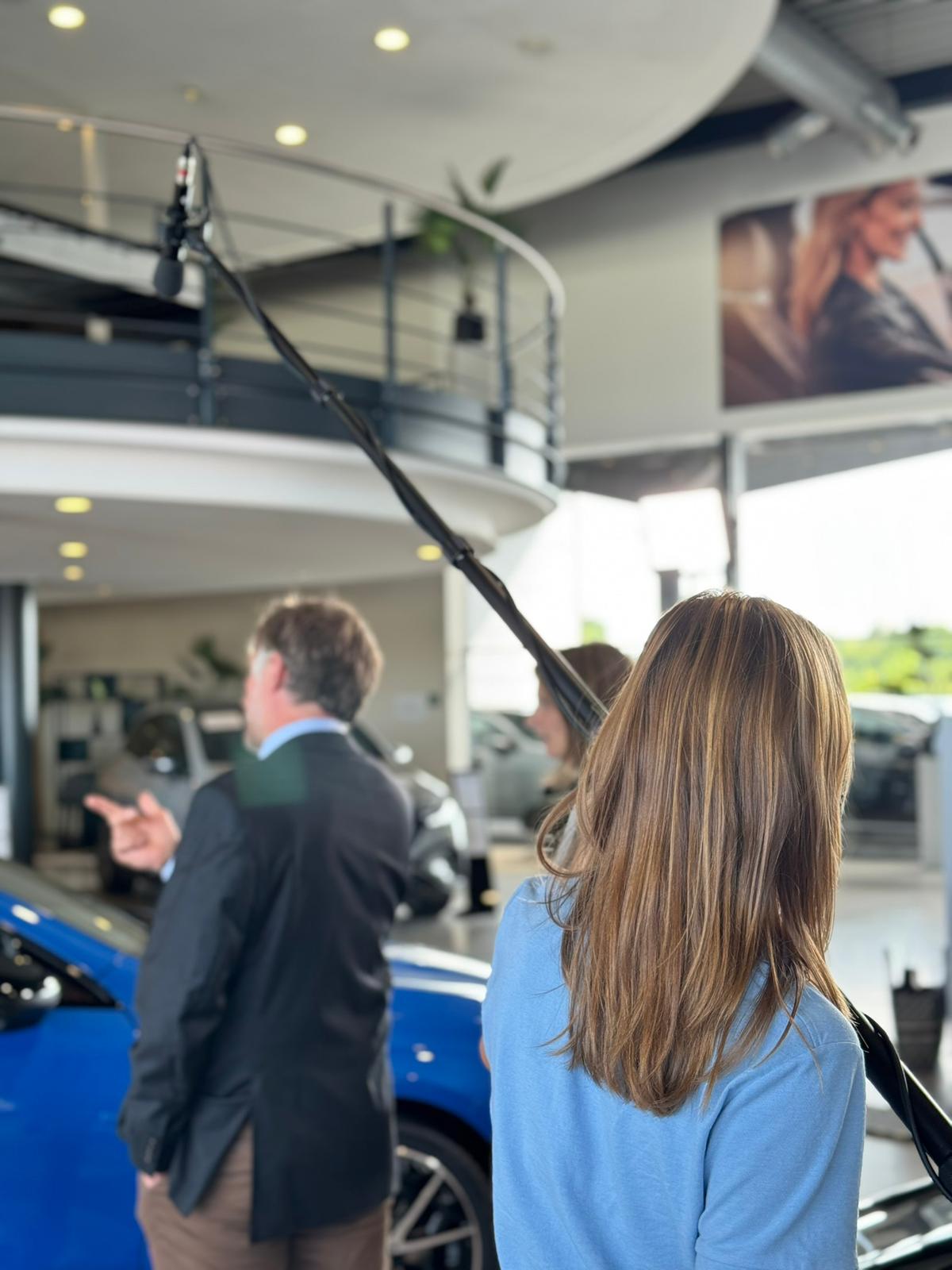
A standard corporate shoot day runs 8 to 10 hours. During that window, the crew handles setup, lighting, sound engineering, directing talent or company executives, capturing b-roll, and managing all on-set logistics. The footage captured on this day determines the quality ceiling of your final edit; no amount of post-production skill can fully recover footage that was poorly lit, badly framed, or captured with substandard audio.
The production phase generates raw materials, not a finished product. What leaves the set are rushes, unedited footage files that will go into post-production. This distinction matters because clients sometimes assume the shoot day is the end of the creative work. It’s actually the midpoint.
Post-production and distribution: turning footage into a finished asset
Post-production covers the full editorial and finishing workflow: assembly edit, rough cut, fine cut, color grading, audio mix, motion graphics, captions, and platform-specific exports. A complete delivery package for a corporate video typically includes a broadcast-ready master file, social cutdowns, multiple aspect ratios (16:9 for web, 9:16 for vertical), and sometimes localized versions for different markets.
Distribution is a step many companies overlook entirely when budgeting. Getting the video published correctly across LinkedIn, YouTube, Vimeo, or an internal LMS takes time and technical formatting knowledge. Agencies that include distribution in scope, rather than treating it as an afterthought, are generally perceived to deliver more value per project dollar, particularly for brands running multi-channel content strategies.
Realistic corporate video production cost ranges in 2026
Budget planning becomes much easier when you have concrete numbers to anchor the conversation. The ranges below reflect current agency pricing in 2026 across both US and European markets, where StreamBox and comparable production studios operate. Industry pricing surveys and agency benchmarks for 2026 support these figures as representative starting points for most corporate video services briefs.
What you’ll pay by video type
Three categories cover the majority of corporate video production briefs:
- Simple explainer video: $5,000, $20,000, depending on animation complexity, script length, and whether the production is live-action or motion graphics-based.
- Training video: $5,000, $16,000 per module, or $1,000, $10,000 per finished minute for more technically complex productions with heavy graphics or compliance requirements.
- High-end brand film: $20,000, $50,000 for a polished single-location production; $50,000, $150,000 and above for multi-location shoots with hired talent, heavy post-production, and campaign-level deliverables.
These are starting points, not ceilings. Corporate video production costs vary meaningfully by market. Local labor and production-cost differences mean budgets stretch differently across cities; in some European locations, a given budget may go further than in major US metros such as New York or Los Angeles, though the gap depends on the specific city, crew tier, and project scope.
What actually drives the price up
The variables that move a quote significantly are predictable once you know what to look for: crew size, number of shoot days, location count, scripting complexity, talent costs (hired actors versus company spokespeople), motion graphics volume, revision rounds included in scope, and the number of platform-specific formats required at delivery.
A reputable agency will provide an itemized quote that reflects these variables line by line. If a quote arrives as a single number with no breakdown, that’s a process red flag regardless of the dollar amount. You can’t evaluate value without knowing what’s actually included.
How long corporate video production projects realistically take
Marketing managers consistently underestimate production timelines. The numbers below are based on how professional studios actually structure projects, not optimistic estimates built around a single shoot day.
Timeline benchmarks by project scope
Three scenarios cover most business video production projects:
- Single-day shoot: 2, 4 weeks from kickoff to delivery, assuming fast internal approvals and a tight, well-defined scope.
- Multi-day shoot: 4, 8 weeks, accounting for more complex pre-production, multiple stakeholders, and longer editorial work in post.
- Large corporate film: 8, 12 weeks or more, driven by location logistics, executive scheduling, multiple revision layers, and complex post-production finishing.
A standard mid-size project breaks down roughly as follows: three weeks of pre-production, one to three shoot days, two weeks of post-production, and one week for final exports, approvals, and platform delivery. The most common cause of timeline slippage isn’t the agency; it’s slow internal approval cycles stretching each phase by days or weeks.
How to protect your timeline before production starts
Two actions make the biggest difference before kickoff. First, map your internal approval chain clearly: identify who has final sign-off on the script, the rough cut, and the final master, and confirm their availability before the project begins. Second, agree on revision rounds and response windows with the agency in writing. A shared understanding of revision cycles included and what triggers additional charges prevents the most common source of both cost overruns and delivery delays.
Choosing the right video format for your goal
Many companies default to a generic “company video” without thinking about where the video will actually live, who will watch it, or what they should do after watching. Format and runtime should be dictated by distribution context and viewer intent, not by internal preference.
Internal distribution: training, onboarding, and leadership messaging
Internal videos perform best when they are concise and frictionless. Formats that work reliably for employee audiences include CEO and leadership updates (2, 5 minutes), onboarding and culture videos (2, 3 minutes), training and compliance modules (2, 5 minutes per module, animated or demo-style), and safety or process explainers. Research on corporate videography and learning retention indicates that pre-recorded tutorials tend to outperform live formats for procedural or compliance-driven content, where consistent delivery and on-demand access matter most.
External distribution: brand story, product demo, and customer case study
For external audiences, the core message must land within the first 10 to 30 seconds. Viewers who don’t see value immediately drop off, and no production quality recovers a slow opening. The top-performing external formats are brand films and company overviews (60, 120 seconds for web and social), product demo videos (2, 4 minutes for sales pages and outbound campaigns), and customer case studies or testimonials (2, 5 minutes for website use, ABM sequences, and sales enablement). Platform matters: the same video needs different cuts for LinkedIn, YouTube, and a sales deck.
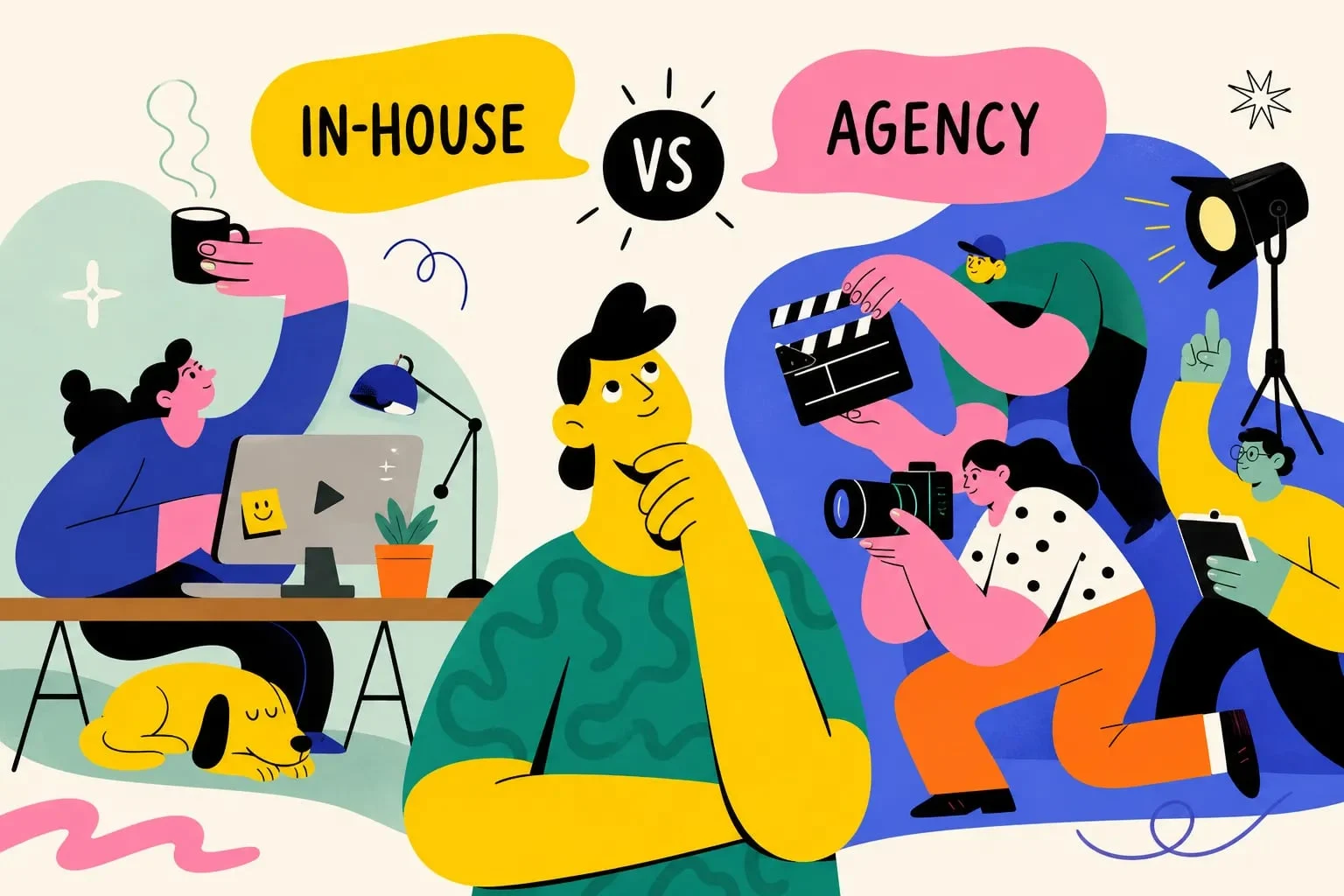
Full-service agency versus in-house production: making the right call
This decision comes down to the frequency, complexity, and consistency of content you need, not just the budget available for any single project. Both paths have legitimate use cases; the key is matching the production model to your actual content demands.
When in-house production makes sense
In-house production works well for high-frequency, low-production-value content: internal announcements, reactive social clips, quick employee updates, and informal video messages. If your company has a dedicated videographer, a capable editor, and the bandwidth to manage production logistics, simple content can be produced cost-effectively without agency involvement. The real constraint for most in-house teams isn’t budget; it’s capacity and depth of expertise when the stakes are higher.
What a turnkey agency delivers that in-house teams rarely can
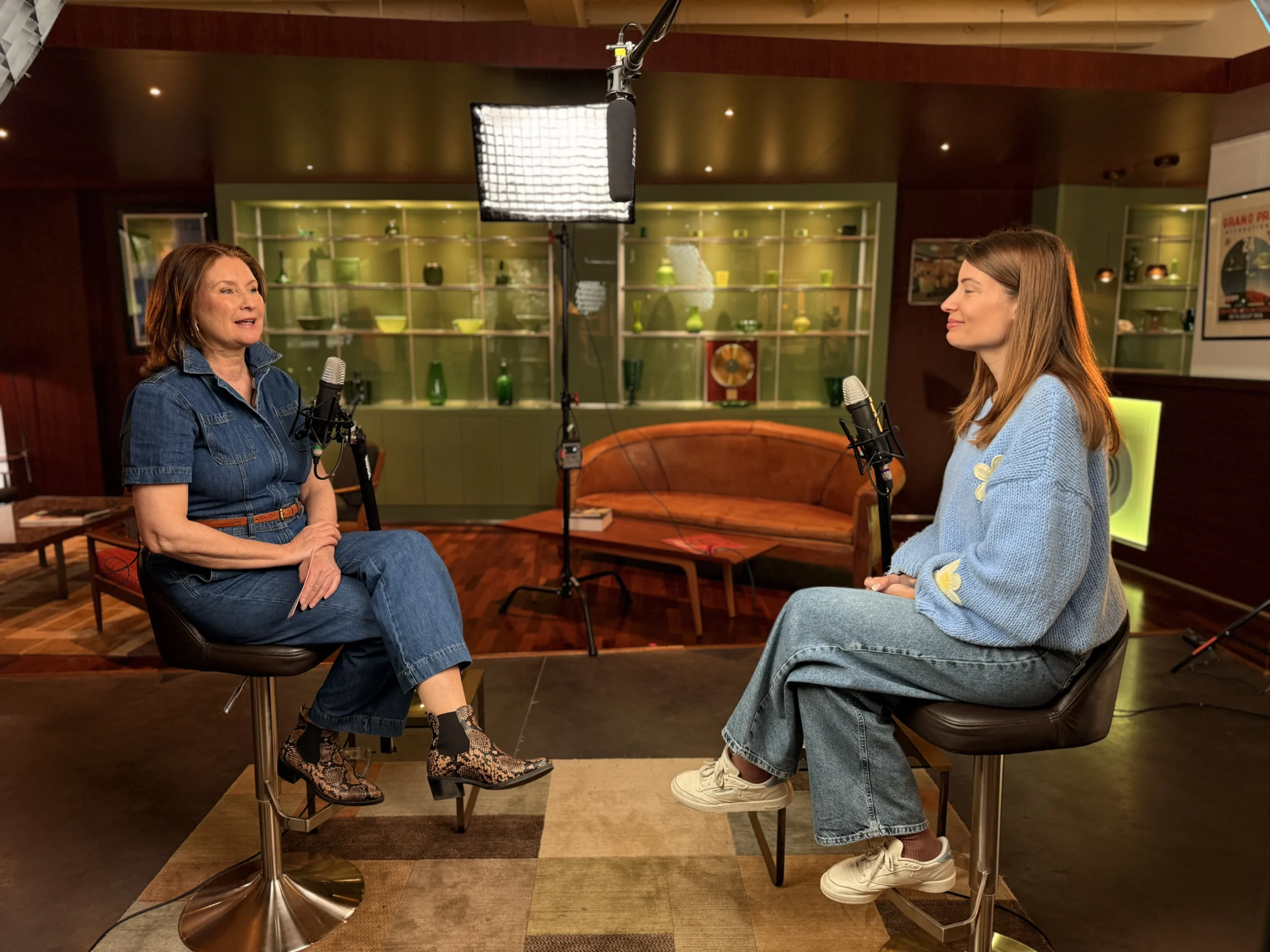
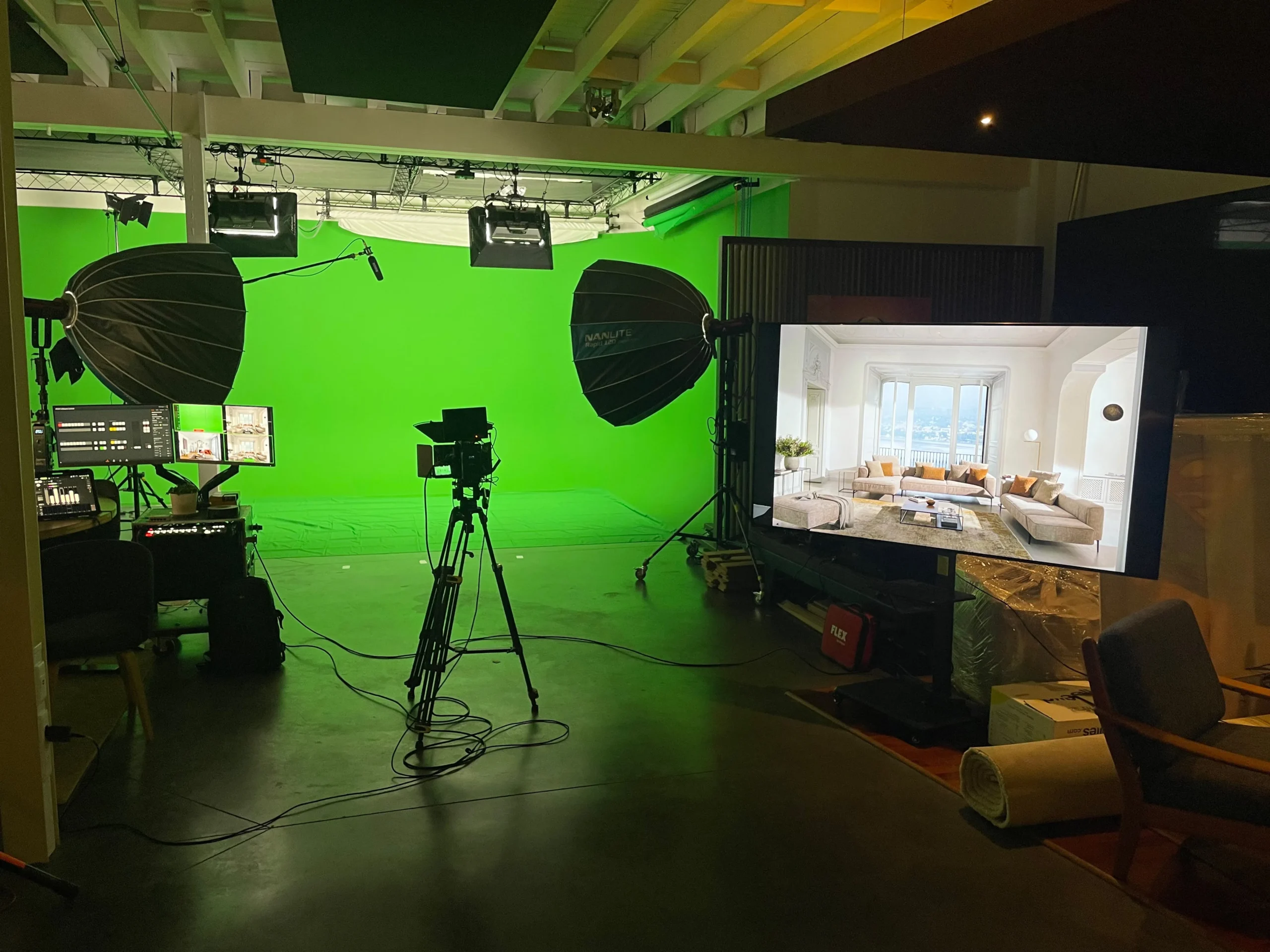
Full-service corporate video services cover the entire production chain, creative direction, scripting, studio or location logistics, filming, post-production, and multi-platform delivery, under one point of contact. For companies that need broadcast-ready content on a consistent basis, this eliminates the coordination burden of managing separate vendors for each production stage. StreamBox, for example, operates a 440m² premium studio near Brussels and assigns a dedicated project manager to every production from brief to publication.
For enterprises running ongoing content programs, quarterly brand films, recurring training series, event coverage across multiple territories, a full-service partner in enterprise video production delivers the predictable quality and reliable timelines that in-house teams rarely sustain over time. One point of contact, one quality standard, one delivery process. That consistency compounds in value the longer the content relationship continues.
A practical checklist for hiring the right corporate video agency
The questions below give you a reliable framework for evaluating any agency before you commit to a project. Ask them in the first conversation and judge answers not just by content but by how prepared and specific the agency’s responses are.
Questions to ask before you sign
- Can you show work in our industry, format, and budget range, not just a highlight reel of your best shots?
- Who is the named producer, director, and editor on this specific project?
- What does your pre-production process look like, and what deliverables do I review and approve before filming begins?
- How many revision rounds are included in scope, and what triggers additional charges?
- What does the quoted price include, and what is billed separately, music licensing, voiceover, travel, reformatting, platform uploads?
- Who owns the raw footage and final files after delivery, and are there any restrictions on reuse?
Red flags that signal a poor fit
The warning signs appear repeatedly with agencies that underdeliver: a vague verbal process with no written milestones, no named team members attached to the project, bundled pricing with no line-item breakdown, and a refusal to share client references on request. Equally telling is when an agency’s scope of work makes no mention of distribution, repurposing, or platform formatting. A production that ends at the master file export is an incomplete service for any brand running a multi-channel content strategy.
The best agencies treat the brief as a strategic document, not just a creative prompt. If the first conversation is mostly about cameras and aesthetics rather than business objectives and distribution channels, keep looking.
What you now know, and what to do next
You now have five things that most marketing managers go into agency conversations without: a clear map of the full production workflow, realistic corporate video production cost benchmarks for 2026, accurate timeline expectations by project type, a format-selection framework tied to distribution context, and a structured set of questions to evaluate any production partner on equal terms.
Corporate video production delivers its strongest return when it starts with a clear brief and ends with a partner who owns the entire process from concept through publication. That model eliminates the coordination friction of managing multiple vendors, protects timelines, and keeps quality consistent across every asset you produce.
For marketing managers who want a single point of contact from brief to published content, the StreamBox team offers project scoping consultations, reach out to discuss what a full-service company video production program could look like for your brand.