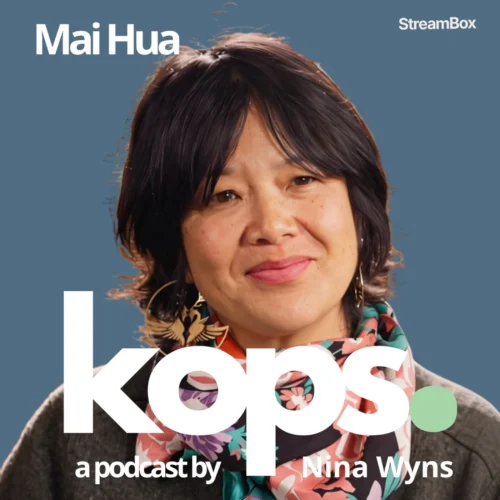
Maï Hua: leaving someone you love, loving yourself and relearning love
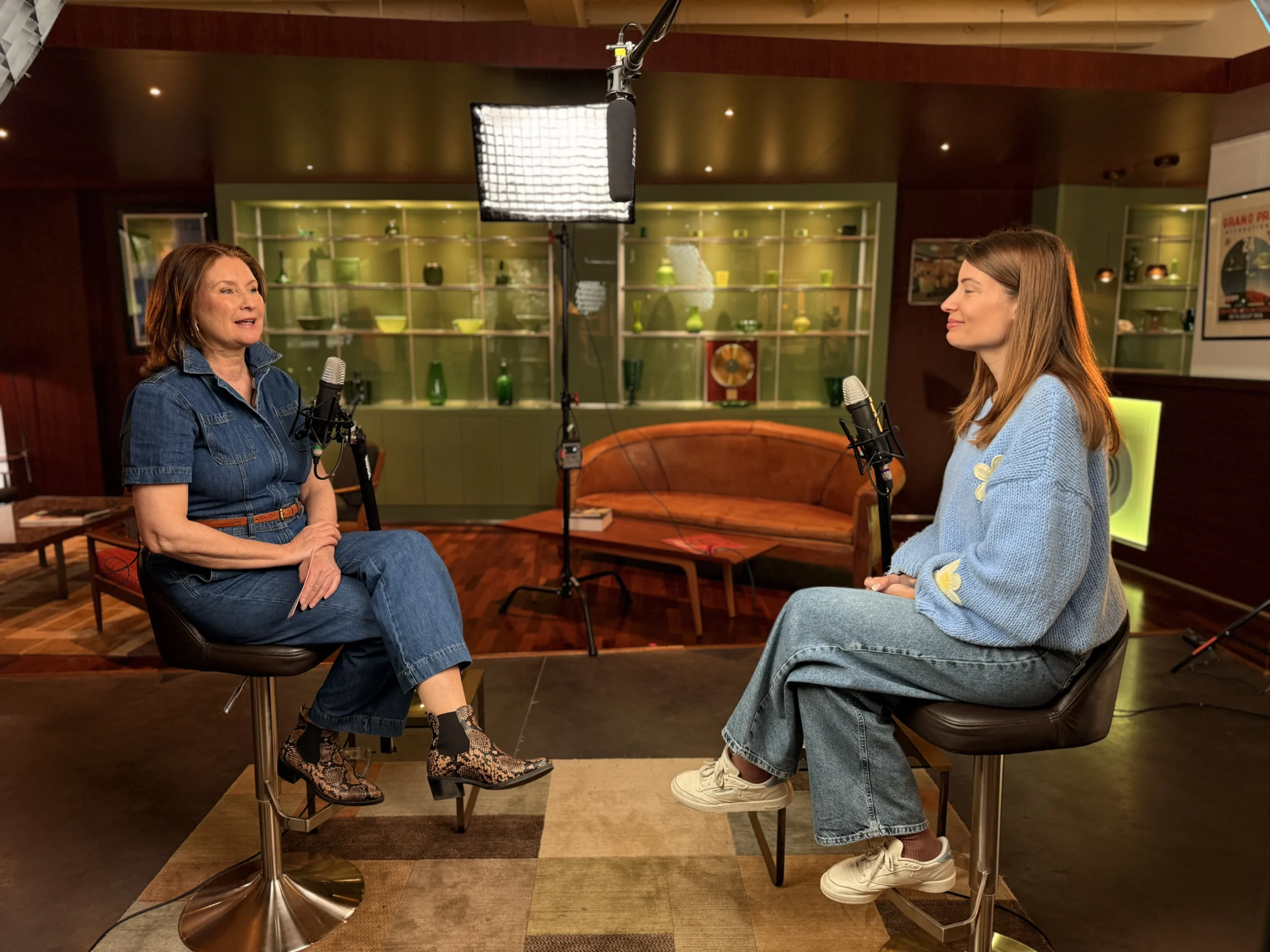
French-Vietnamese documentary maker Maï Hua long believed she came from a line of cursed women. Her three films, Les Rivières, Make Me a Man and Mayday, put love at their heart. In this episode of KOPS, she explores love in all its forms with Nina Wyns: self-love, love across generations, love within a couple, and the heart-wrenching choice of leaving someone you love in order to choose life. The episode is in French.
A childhood of great vitality and deep worry
As a child, Maï Hua laughed loudly and was full of energy. But as the eldest child of an immigrant family, a girl, born to a mother deeply affected by a difficult family legacy, she also carried a deep anxiety: the fear of not having her place, of not speaking French well enough. She became a brilliant student, a “bulldozer” who passed every competitive exam.
Motherhood, her greatest teacher
Her greatest spiritual teachers, she says, are her two children. Her daughter’s arrival brought up everything that had been swept under the carpet. Two and a half months after the birth, she went through depression: she had to learn to recognise that something was wrong and to ask for help, when until then she had ticked every box of success. Her son, who came next, confronted her with an otherness she did not understand and forced her to open her heart. She also mentions two miscarriages, which reminded her of the fragility of the body and of life.
“Les Rivières”: four generations of women and the end of silence
Her first film follows four generations of women in her family: her grandmother, her mother, herself and her daughter. Six years of her life that redefined everything. At first she only wanted to document the return of her grandmother, who was dying in Vietnam and whom her mother, a doctor, had decided to bring back to France. The film became a living organism that broke a family culture of silence.
Facing resistance, she had to own her desire: to make the film for herself and her children, without asking permission, but asking to be understood. The men in the family agreed to step out of frame and listen. On seeing the film, her 95-year-old grandmother started dancing and said “I am someone”. And far from a cursed lineage, Maï discovered powerful women, full of joy and life.
Leaving someone you love in order to choose life
One scene deeply moved Nina: the grandmother placing her hand on her bedridden husband’s face to say goodbye after 70 years together, so she could leave to be cared for. Maï Hua explains that we need to tell love apart from submission, fear and respect. In her case, staying meant dying through neglect. Her mother had realised it was not dementia but depression. Against all odds, her grandmother began walking again, dancing and even falling in love. A heartbreaking choice, made possible because hands were held out to her.
“A strong human being is one who rises to the situation, sometimes even by falling apart and allowing themselves to be real.”
Maï Hua
The couple as a space to be fully yourself
Do you need to be in a couple to be happy? No, she answers. For a long time she believed her life as a woman was worthless without a man. Today she sees a couple as a shared exploration where each person can be completely themselves, vulnerabilities included. It is also a place where you forgive each other for going too far, where you admit your mistakes, and where respect remains the condition for love.
With Make Me a Man, filmed inside the men’s support groups run by her partner, a therapist, she expected discussions about masculinity. Instead she heard men talking about their children, their relationships and their parents: the same questions raised in women’s circles. She also saw how history, such as the memory of the First World War in England, shapes a different male psyche. She agrees with Nina on one point: non-violent communication is valuable, but above all you must stay open to the other person in all their complexity.
“Mayday”: love, healing and creativity
Her third film follows twelve people on a therapeutic retreat and invites the viewer to become the thirteenth. A “factory of empathy”, she calls it. The shoot forced her to face the power she held over the people she filmed, having built herself on trying to please. For her, love is a great source that is always there, though the path to it is sometimes overgrown: the work is to clear the way.
“We completely underestimate our capacity to love and to be loved.”
Maï Hua
Key takeaways from the episode
- Putting words to a long-silenced family story can free several generations.
- Love needs to be told apart from submission, fear and mere duty.
- Strength also means allowing yourself to fall apart and to ask for help.
- A happy couple lets each person exist and be fully themselves, imperfections included.
- Loving means giving, but also learning to receive.
Listen to KOPS
With KOPS, “Keep Our Planet Safe”, Nina Wyns hosts a podcast about reconnecting: taking care of yourself, others and the world around us.
More episodes of KOPS
 Victoire Becquart: life after cycling from Brussels to Togo, and the fears that remainOn KOPS, Victoire Becquart talks about coming home after 9,000 km by bike to Togo: everyday fears, social media and the confidence she gained.
 Letting go: why the need to control everything stops us from living in peaceNina Wyns opens up about her obsession with control and shares three ideas for turning the fear of an uncertain future into letting go…
 Ilios Kotsou: can we fight our emotions? Insights from a psychology professorIlios Kotsou, a psychologist specialising in emotions, tells Nina Wyns how to welcome our emotions, move past negativity bias and cultivate presence.
A StreamBox production
This podcast is recorded and produced by StreamBox, podcast studio and agency in Brussels.