Sophie Moens: being a free woman after 50, between radio, menopause and philosophy
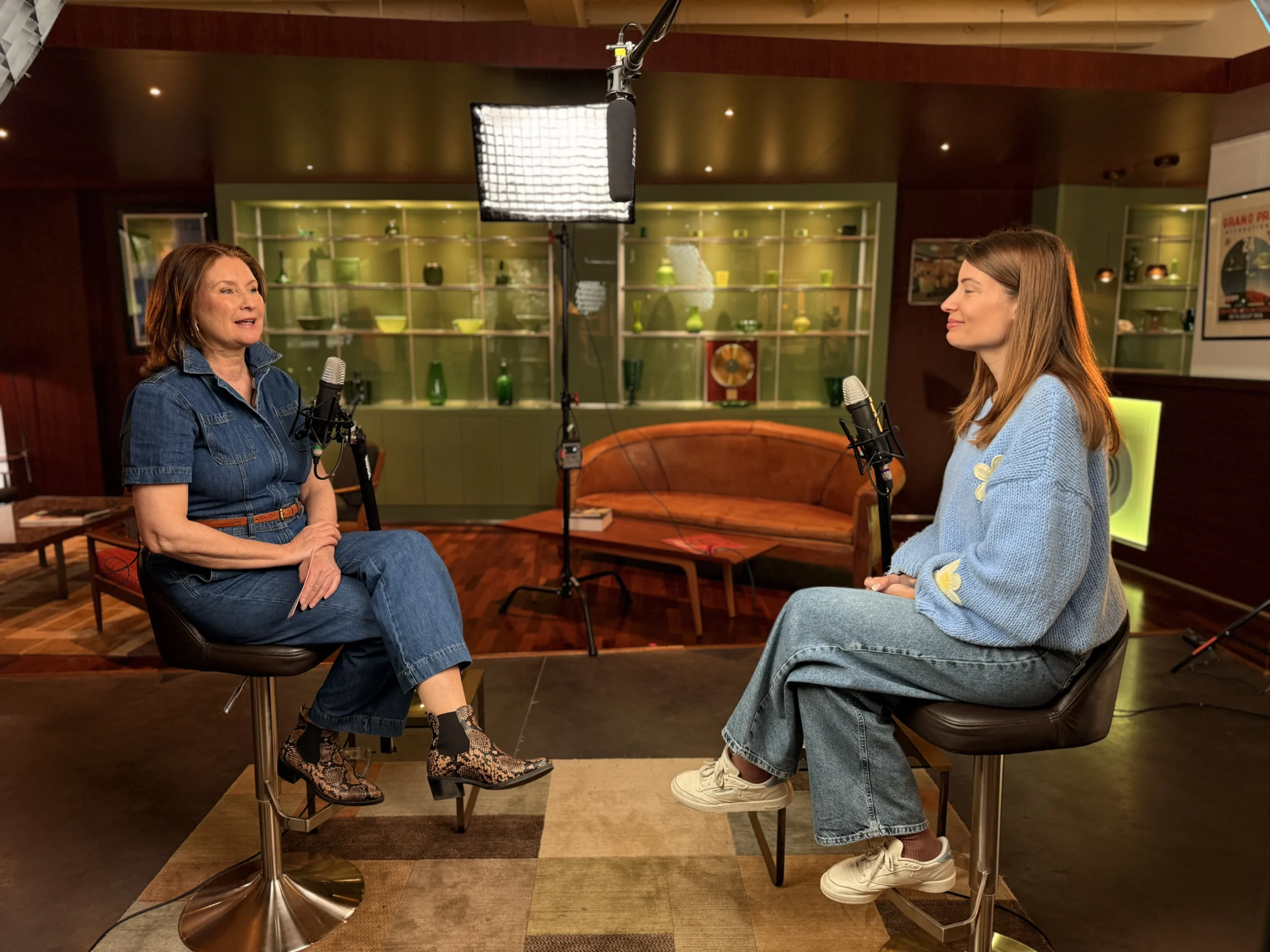
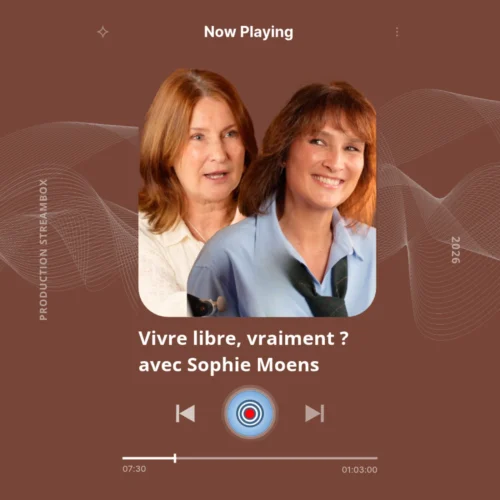
For twenty years, her voice has kept listeners of La Première company on the food show “Bientôt à table”. In this episode of Histoires de Femmes, Sophie Moens moves to the other side of the microphone to talk with Yvana Creaco. She discusses food and humanity, the image imposed on women, turning fifty, which she went through like a “long dark corridor”, and the freedom that sits at the heart of her life. The episode is in French.
On the other side of the mic: learning to let go of control
For someone who has been asking the questions for years, being interviewed first feels like losing control. Sophie Moens readily admits she likes to have things in hand, because it is reassuring. She had to take charge of her own life very early on, and that need for control grew with her.
With age, though, she has understood that we control almost nothing. Yvana Creaco, who calls herself something of a Stoic, recalls Seneca’s lesson: what happens to us does not depend on us, but what we do with it does. For Sophie, this is real mental discipline, and it becomes the thread running through the whole conversation.
“Bientôt à table”: food as a gateway to people
When she launched her food show, Sophie Moens did not want to talk about recipes. What interests her are the people: market gardeners, farmers, artisans, entrepreneurs who start out, fail and start again. Through food, you discover society, civilisations and life projects. Market gardeners, she says, are often great philosophers, because the land teaches humility, the rhythm of the seasons and the fleeting nature of things.
“I don’t see myself as a food presenter, but as someone who passes on a passion for food.”
Sophie Moens
She stands by a strong idea: food is the foundation of everything, yet we treat it as a minor subject. Eating means letting the living world into ourselves, and she regrets that meals have lost their almost sacred dimension. The two women draw a parallel with social media: we swallow information the way we swallow a delivered takeaway, fast and without thinking. “Today we eat the way we devour the world,” she sums up. The table, by contrast, remains a place for connection, debate and civic awareness.
A silent childhood and the choice of radio
As a child, Sophie was solitary and already very reflective, unable to speak her mind in front of an authoritarian father. She promised herself that one day those words would come out. She learned early to listen to her inner voice and to follow her own path rather than other people’s advice.
Her fascination with the media was born in front of the television, but radio became her medium, one she would not give up for anything. After more than nine years of morning shows, she sees it as a space of freedom and authenticity: you enter people’s lives as they wake up, and you cannot play a part. Television, in her eyes, remains a game of image, posture and staging.
Image, perfection and the pressures placed on women
The relationship with one’s image takes up a large part of the conversation. For Sophie, the quest for perfection leads nowhere: beauty comes from within, from a light in someone’s eyes, from being in tune with who you are. Yvana Creaco, a former model, recalls refusing an operation she was asked to have in the 1980s, and shares what she has always told her daughters: an image is never fixed.
Together they criticise the size standards imposed by parts of the fashion industry, which they find disconnected from real women and harmful to the teenagers who see them constantly on social media. Their message: be far gentler with a body that changes and ages, and never become a slave to your image.
Turning fifty: getting through the “long dark corridor”
Sophie Moens speaks about menopause with great honesty. She expected it as a natural stage of life. She had no marked physical symptoms, but an emotional upheaval she had not seen coming: a fog, a disconnection from herself, a loss of desire. She, so positive and welcoming, no longer wanted to host or feed anyone.
This period often coincides with other changes: children leaving home, questions about time passing, a changing place at work as a new generation arrives. For her, it also played a part in the end of a relationship. She compares it to a storm at sea: all you can do is hold the helm and wait for calm, hoping someone is there to steady you. She stresses how little women are told beforehand, and the right not to bounce back immediately: there must be time for tears and grief.
Rebuilding with books, nature and small joys
Her path back runs through chosen solitude and an appetite for reading that verges on the insatiable. Seneca, Bergson, Montaigne, the Taoists: philosophers help her find meaning where there seems to be none. Nature also plays a big role, with long daily walks with her two dogs and time spent watching the seasons change.
She talks about “intase”, a joy that comes from within, the opposite of ecstasy, found in a morning coffee, a ray of light or a message from a child. It is not magical thinking, she insists, but a discipline: one step, then another, with plenty of kindness towards yourself. Saying you are not well is not an admission of weakness, but an admission of being human. And if she could share a dinner with just one person, it would be Lino Ventura, a figure of quiet strength and a lover of good food.
“She’s a woman I think I already am and have always wanted to be: a free woman.”
Sophie Moens
Key takeaways from the episode
- We cannot control what happens to us, only what we do with it.
- Food is a gateway to people, and the way we eat mirrors our relationship with the world.
- Beauty is not measured by a dress size: chasing perfection is a dead end.
- Turning fifty can shake your mood as much as your body, and it deserves to be explained and talked about.
- Rebuilding takes time: reading, nature and everyday joys help bring back the taste for life.
Listen to Histoires de Femmes
In Histoires de Femmes, Yvana Creaco gives the floor to inspiring women who share their journeys, their struggles and their fresh starts.
More episodes of Histoires de Femmes
 Nina Cataldo, author of “Transparente”: identity, self-confidence and rebirthIn “Transparente”, Nina Cataldo tells the story of becoming herself. She talks to Yvana Creaco about identity, self-confidence and her beloved dog Oxy.
 Nina Wyns and Yvana Creaco: can you be young and free? A dialogue between generationsNina Wyns, creator of KOPS, and Yvana Creaco compare their generations: ecology, social pressure, the right not to be okay, freedom and the value…
A StreamBox production
This podcast is recorded and produced by StreamBox, podcast studio and agency in Brussels.