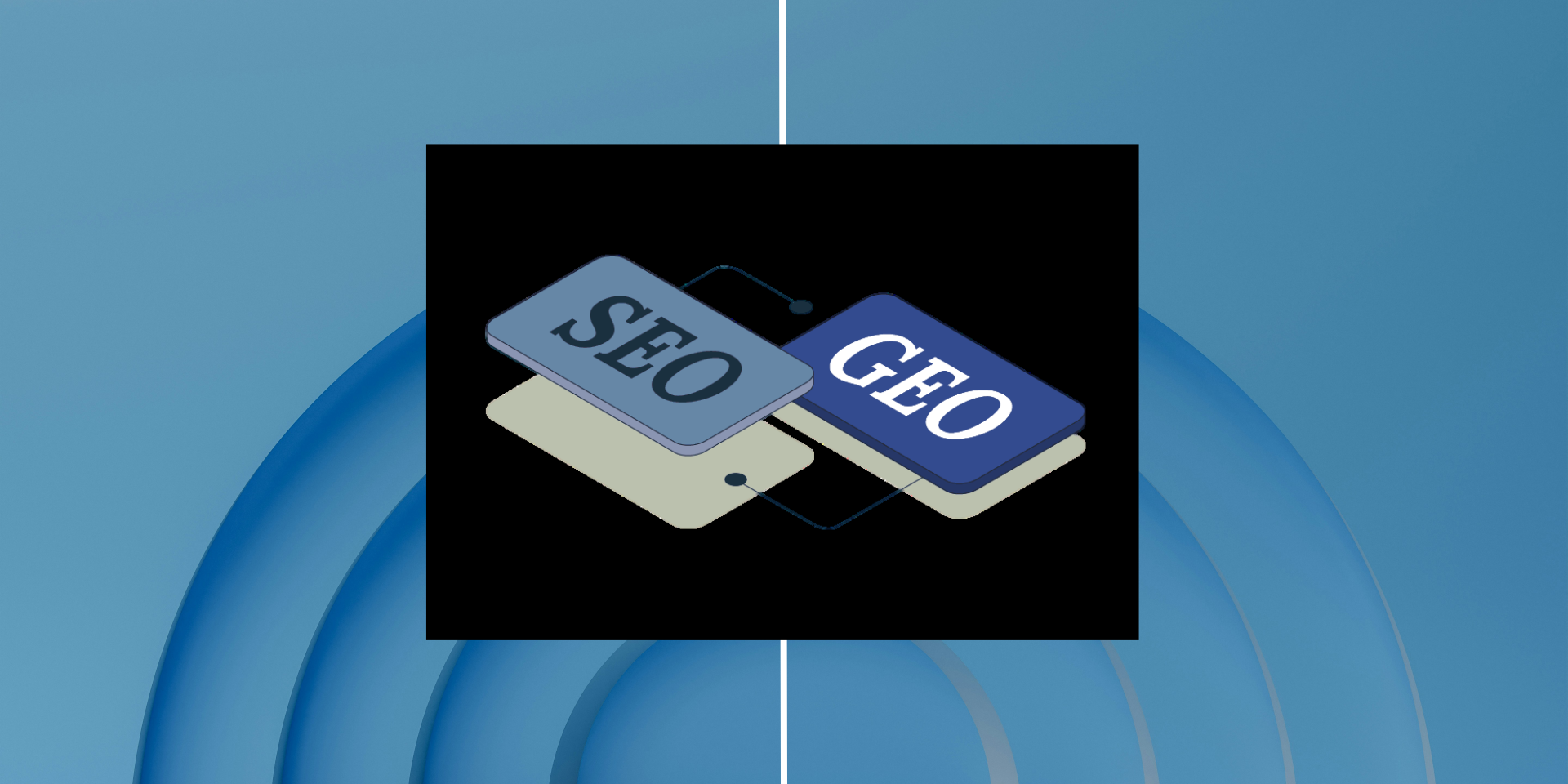
Generative search engines have changed the rules of the digital game. Google SGE, ChatGPT, Copilot and Perplexity no longer list links: they synthesize answers. In this new context, your brand needs to be cited by AIs, not just well-positioned on Google. This is why a well-constructed YouTube GEO strategy has become a major competitive advantage. Indeed, YouTube sends credibility signals to generative algorithms that no other channel can reproduce as easily.

From classic SEO to GEO: a radically different approach to visibility
Traditional SEO was all about positioning pages in Google results. GEO (Generative Engine Optimization), on the other hand, answers a fundamentally different question: what sources does an AI use to build its response?
Generative engines no longer evaluate URLs. Instead, they evaluate brands, experts and recognized entities. As a result, good SEO positioning no longer guarantees a presence in the AI results.
What counts now isbrand authority. In other words, you have to be perceived as a reliable and legitimate source by the algorithms. Find out how our digital services at Streambox integrate these new realities.
YouTube GEO strategy: why video sends powerful AI signals
Of all the digital levers available, YouTube clearly stands out. An active channel sends strong credibility signals to generative AIs.
The 4 key signals of an active YouTube channel
For a generative engine, here’s what a regular YouTube channel looks like:
- A proof of human existence: indeed, a website can be generated by an AI, but an active video channel is not easily simulated.
- Editorial continuity: moreover, the regularity of our publications is proof of a lasting commitment to a specific theme.
- Demonstrated expertise: for example, videos answer concrete questions, positioning the brand as a reference.
- A real audience: finally, comments and subscribers are social proof that is difficult to falsify.
In short, YouTube transforms a simple online presence into a credible media entity. That’s why a well thought-out YouTube GEO strategy is a decisive advantage today.
AIs think in entities, not web pages
Many companies have yet to grasp this essential point. Generative engines don’t evaluate URLs. They evaluate entities: recognized brands, thematic experts, reference organizations.
An active YouTube channel does just that. It transforms your company from a “website” to an “expert media entity”. What’s more, the consistency between your videos and your other channels reinforces this signal of authority.
Building an identity recognized by AIs
Cross-channel consistency plays a decisive role in AI perception. Your YouTube videos, your blog and your social networks all need to speak the same editorial language. Discover our expertise in social media strategy and community management to help you achieve this.
What the YouTube GEO strategy actually changes
For brands investing in quality video, YouTube plays a triple role. It reinforces thematic authority, sends a signal of legitimacy to AIs and accelerates your presence in generative synthesis.
However, it’s important to understand one thing: this strategy complements SEO, not replaces it. Good SEO remains indispensable. However, it is no longer sufficient on its own to guarantee a presence in the AI results.
As a result, the two approaches are mutually reinforcing. The stronger your SEO, the more AIs discover your content. The stronger your video authority, the more they cite you.
The winning combination for being quoted by AIs
The most visible companies in the generative response thus combine three pillars. First, a well-structured, technically impeccable website. Second, a coherent editorial strategy with regular, useful content. Finally, an active YouTube GEO strategy that demonstrates the human expertise behind the brand.
It’s this synergy that enables us to be regularly quoted by ChatGPT, Google SGE and Perplexity. Find out more about our YouTube agency for B2B companies.
How to launch your YouTube GEO strategy
Are you convinced by YouTube’s potential for GEO? Here are the concrete steps to get you started.
1. Define your areas of expertise
Identify 3 to 5 topics on which your brand can position itself as a reference. These topics must correspond to the real questions your prospects are asking AIs. That’s why the choice of topics determines the whole strategy.
2. Produce high value-added content
Avoid promotional videos. Instead, opt for tutorials, analyses and expert interviews. After all, AIs don’t recommend brands that advertise. Instead, they recommend brands that inform and educate their audience.
3. Ensuring cross-channel consistency
Every YouTube video needs to find a relay on your site, your social networks and your newsletter. In this way, you multiply the authority signals sent to the algorithms. What’s more, you’ll reach your audience at several points of contact.
4. Measure the right indicators
In addition to views, keep an eye on your citation rate in AI responses. You can also track your visibility in Google Search Console. Then adjust your strategy according to actual data.
YouTube and GEO: what you need to know
Generative AIs recommend credible brands, not websites. As a result, YouTube is no longer an optional channel reserved for large corporations. It’s now an accessible tool for building brand authority that GenAI algorithms recognize.
In short, your YouTube GEO strategy needs to combine editorial regularity, cross-channel consistency and value-added content. This is how you become the source that AIs naturally cite.
To deepen your understanding of GEO, take a look at the analyses available on Moz and Search Engine Land, two key references in the sector.
Ready to make YouTube a cornerstone of your GEO strategy? Contact the Streambox team for a personalized audit.
GEO (Generative Engine Optimization) is the set of practices designed to optimize a brand’s visibility in the responses of generative search engines such as Google SGE, ChatGPT, Copilot or Perplexity. Unlike traditional SEO, which seeks to position web pages in traditional search results, GEO aims to be cited or mentioned directly in the summaries produced by AIs. The logic changes: it’s no longer a question of displaying a link, but of being recognized as a reliable and legitimate source by the generative algorithms.
YouTube sends very strong credibility signals to generative AIs: editorial regularity, demonstrated expertise, relationship with a real audience and proof of human existence (difficult for an AI to simulate). By regularly publishing relevant video content on specific themes, a brand becomes an “expert entity” in the eyes of the algorithms, increasing its likelihood of being cited in generative responses.
No, traditional SEO remains indispensable and forms the basis of any solid digital strategy. GEO complements it, not replaces it. The most visible companies in AI responses are those that combine good SEO, a coherent editorial strategy and an active video presence. The two approaches reinforce each other: good SEO facilitates content discovery by AIs, while strong brand authority (especially via YouTube) boosts the overall credibility of the domain.
Focus on content with high added value: tutorials, in-depth analyses, expert interviews, answers to frequently asked questions from your target audience. Educational and didactic formats are particularly effective, as they respond directly to the types of queries that users pose to generative AI. Regularity is also essential: a channel that publishes regularly sends out a much stronger signal of editorial continuity than one with few highly polished videos.
There are a number of indicators that can be used to measure this impact: your brand’s citation rate in the responses of the main generative engines (to be tested manually with target queries), the evolution of your share of voice in Google SGE results, the increase in brand traffic (direct searches for your name), and the growth of organic mentions on the web. Tools such as Google Search Console, Brand24 or specialized GEO monitoring solutions can help you track these metrics over time.